MY ACCOUNT
DONATE
SEARCH
LA County Library Logo
MY ACCOUNT
DONATE
SEARCH
  • GET A LIBRARY CARD
  • LOCATIONS
  • BOOKS & MATERIALS

    • Search Catalog
    • Booklists
    • Special Collections
    • Recommend A Title
    • Customized Recommendations
    • Books by Mail

    DIGITAL LIBRARY

    • eBooks & Audiobooks
    • Movies & TV
    • Music
    • Newspapers & Magazines

    MORE TO BORROW

    • CA State Parks Passes
    • Hotspot Loans
    • Tools & Musical Instruments
    • Museum Passes
    • Board Games
    • Seeds

    HELP

    • Getting Started Using the Online Catalog
    • Borrowing Materials
    • Download the Library Mobile App
    • Frequently Asked Questions
    • Events Calendar
    • Virtual Programs
    • Virtual Author Talks
    • YouTube Channel
  • RESEARCH

    • Databases
    • Special Collections
    • Digital Collections
    • Biblioboard Community Collections
    • Local History
    • Transcribe Letters
    • Federal Government Documents

    LEARN

    • Online Learning
    • Earn Your High School Diploma
    • Reading & Writing for Spanish Speakers
    • Learn Basic Tech
  • EXPLORE BY INTEREST

    • Cultural Resource Centers
    • Business & Career
    • Citizenship & Immigration
    • Faith, Culture, and Community
    • LBGTQ+ Pride
    • Parenting
    • Tax Informatiom
    • Veterans
    • Writers

    EXPLORE BY AGE

    • Early Learners
    • Kids
    • Teens
    • Students
    • Emerging Adults
    • Adults
    • Older Adults
  • CONNECT TO TECH

    • Wi-Fi
    • Hotspot Loans
    • Public Computers
    • Wireless Printing & Copies

    MOBILE FLEET

    • Bookmobiles
    • MākMō

    COMMUNITY

    • Reserve Meeting & Study Rooms
    • Emergency & Disaster Preparedness
    • Health & Wellness
    • Legal Resources
    • Books for Jails
    • Little Libraries
    • Metro Tap Cards
    • My Brother's Keeper Peer Advocates
    • EV Charging Locations

Pico Rivera

Community History

Pico Rivera is a fast-growing city of about 65,200 people in a more than eight-square-mile area located on the eastern border of the Los Angeles basin and southern border of the San Gabriel valley. Called Sejat by Native Americans who believed that the world began in the area where the city is now, Pico Rivera today has changed from its original forested and bucolic state into an urban region easily accessible by car (via the Pomona, Santa Ana, and San Gabriel freeways), plane (via Los Angeles International Airport), and train (via the Union Pacific Railroad, Southern Pacific Line, and the Atchison, Topeka and Santa Fe Railway Company).

The towns of Pico and Rivera, from which the city originated, officially began in the 1880s when the Union Pacific and Atchison, Topeka and Santa Fe railroads built rail lines through the region. Blessed with fertile soil, both communities became known for their walnuts, avocados, and other crops, and retained their agricultural character through the mid-1940s. When a growing influx of new residents came to Pico Rivera after the end of World War II, development began supplanting farming as the landscape became dotted with housing subdivisions, schools, stores, and churches.

As the population grew, so did residents’ collective sense of civic duty and desire to blend the two separate towns. On January 7, 1958, the majority of voters in Pico and Rivera voted to incorporate as one municipality and with the decision becoming official that January 29, Pico Rivera became Los Angeles County’s 61st city.

city of pico rivera

Image Gallery

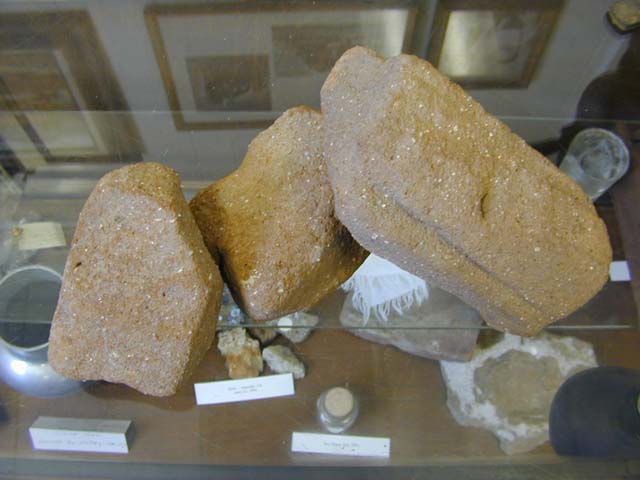
Adobe bricks from the original Mission San Gabriel site on the northwest corner of Rosemead and Beverly boulevards
Adobe bricks from the original Mission San Gabriel site on the northwest corner of Rosemead and Beverly boulevards, 1771 [Courtesy of the Pico Rivera History and Heritage Society Museum]
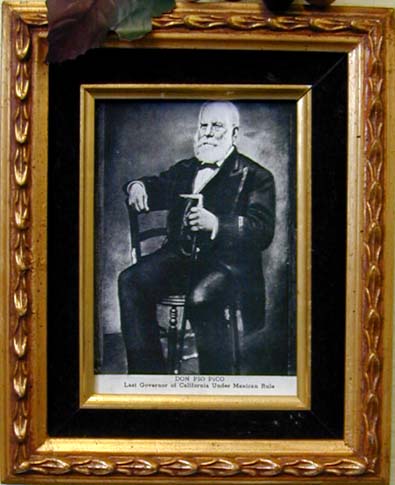
Photograph of Pio Pico
Photograph of Pio Pico, c. 1880s [Courtesy of the Pico Rivera History and Heritage Society Museum]
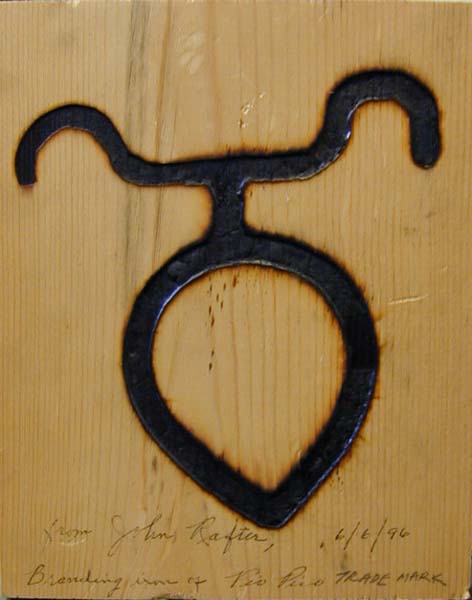
Pio Pico's brand
Pio Pico’s brand, 1830s-1840s [Courtesy of the Pico Rivera History and Heritage Society Museum]
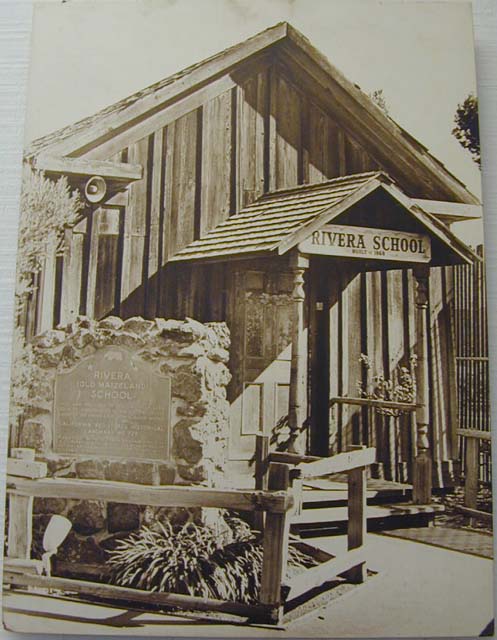
Rivera School
Rivera School, c. 1900 [Courtesy of the Pico Rivera History and Heritage Society Museum]
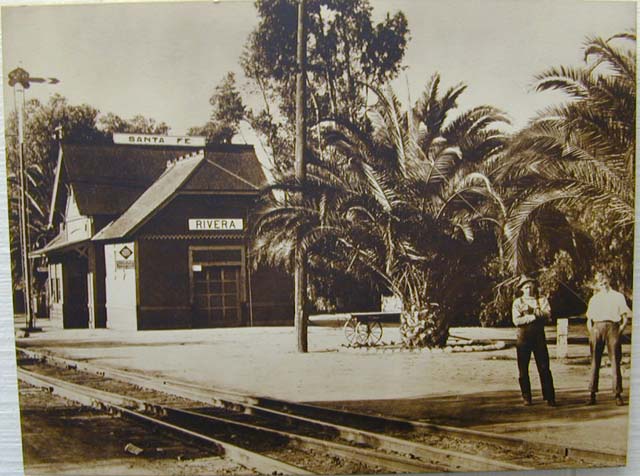
Santa Fe Depot in Pico Rivera
Santa Fe Depot in Pico Rivera, c. 1900 [Courtesy of the Pico Rivera History and Heritage Society Museum]
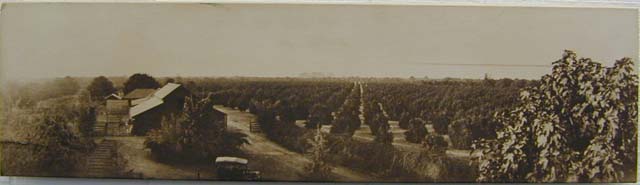
Walnut orchard in Pico Rivera
Walnut orchard in Pico Rivera, c. 1900 [Courtesy of the Pico
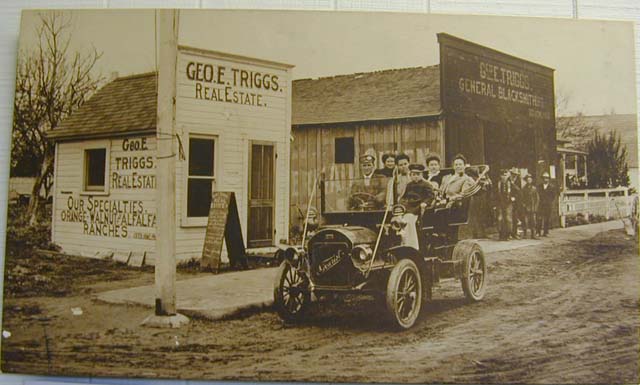
Pico Rivera street scene
Pico Rivera street scene, 1907 [Courtesy of the Pico Rivera History and Heritage Society Museum]
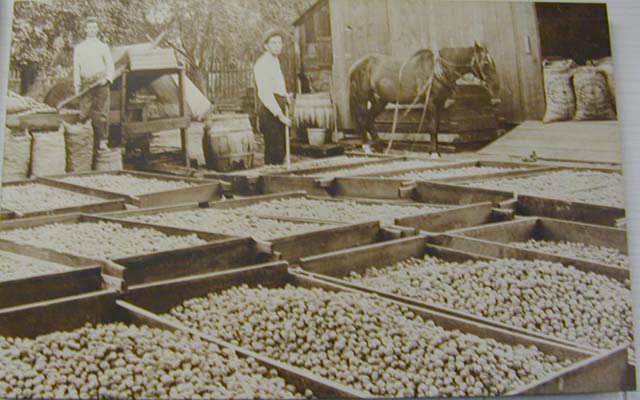
E. W. Reider (on the right) during the walnut harvest in 1905 in Pico Rivera.
E. W. Reider (on the right) during the walnut harvest in 1905 in Pico Rivera. [Courtesy of the Pico Rivera History and Heritage Society Museum]
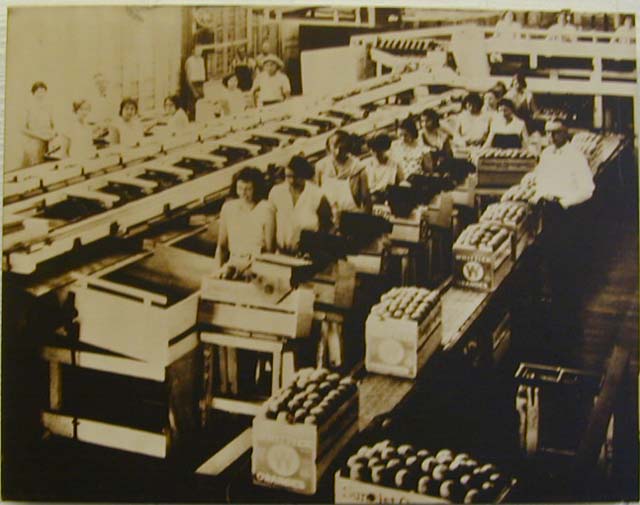
Packing of oranges
Packing of oranges, 1920s-1930s [Courtesy of the Pico Rivera History and Heritage Society Museum]
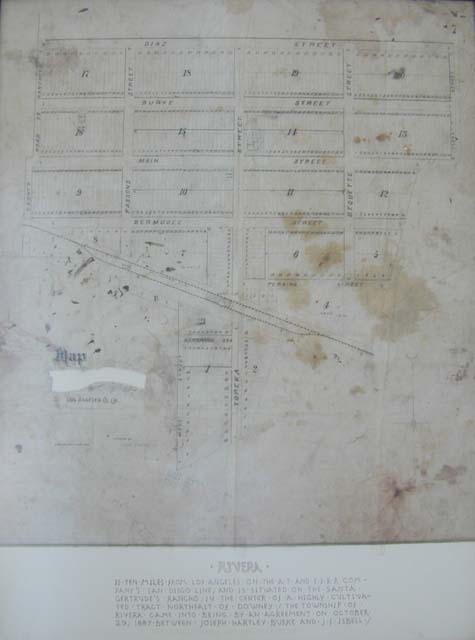
Map of Rivera
Map of Rivera, 1880s [Courtesy of the Pico Rivera History and Heritage Society Museum]
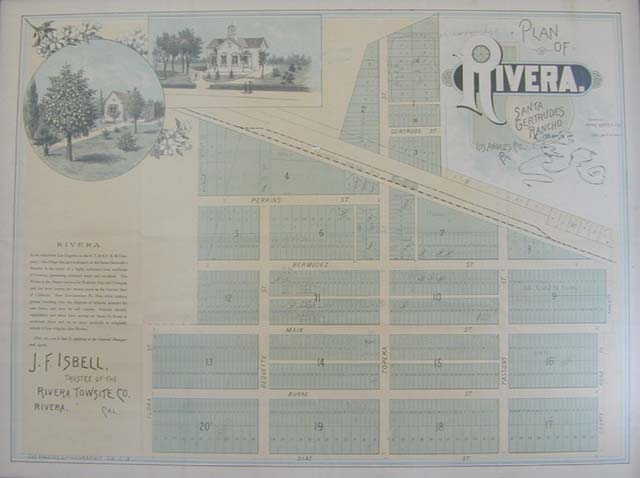
Real estate brochure showing plan of the townsite of Rivera
Real estate brochure showing plan of the townsite of Rivera, 1880s [Courtesy of the Pico Rivera History and Heritage Society Museum]
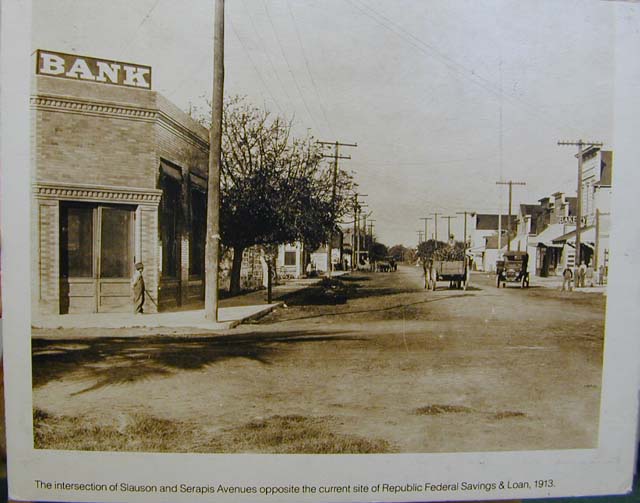
Intersection of Slauson and Serapis avenues in Rivera
Intersection of Slauson and Serapis avenues in Rivera, 1913 [Courtesy of the Pico Rivera History and Heritage Society Museum]
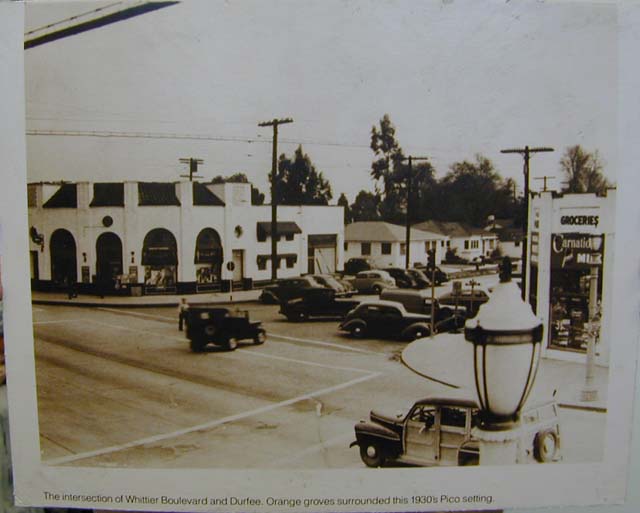
Whittier Boulevard and Durfee in Pico Rivera
Whittier Boulevard and Durfee in Pico Rivera, 1930s [Courtesy of the Pico Rivera History and Heritage Society Museum]
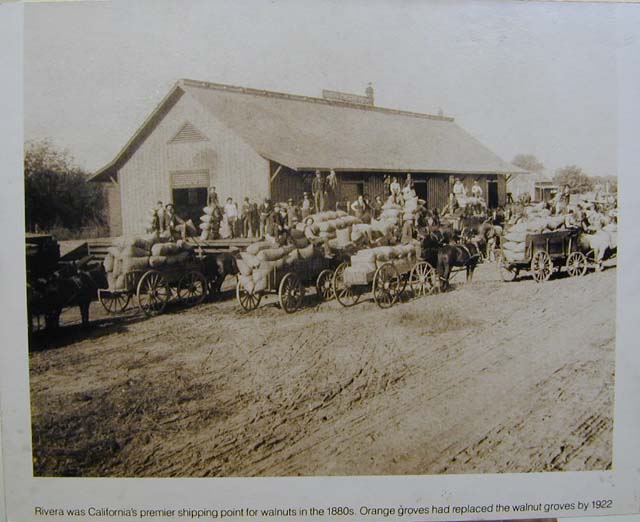
Walnut shipment from Rivera freight house
Walnut shipment from Rivera freight house in 1880s [Courtesy of the Pico Rivera History and Heritage Society Museum]
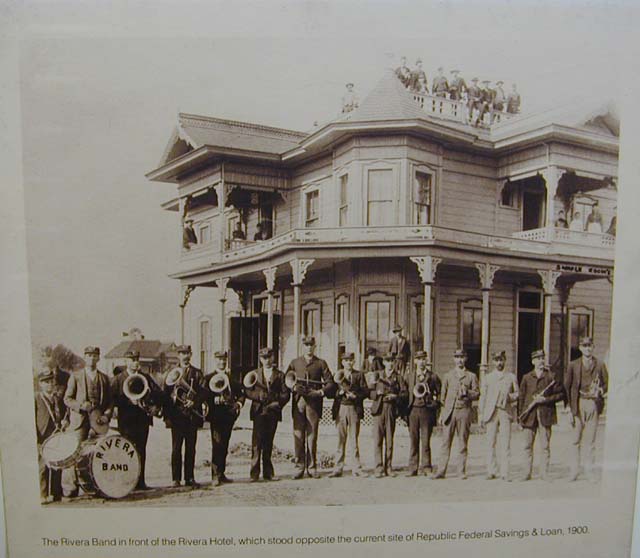
Rivera Band in front of Rivera Hotel,
Rivera Band in front of Rivera Hotel, 1900 [Courtesy of the Pico Rivera History and Heritage Society Museum]
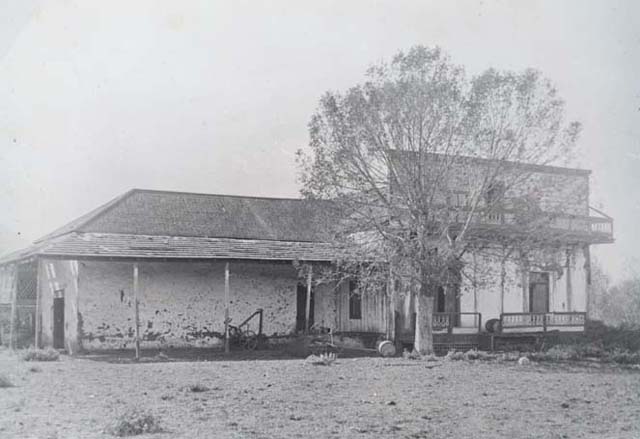
Pio Pico's adobe home, 'El Ranchito', on the San Gabriel River
Pio Pico’s adobe home, ‘El Ranchito’, on the San Gabriel River, c. 1900 [Courtesy of the Pico Rivera History and Heritage Society Museum]
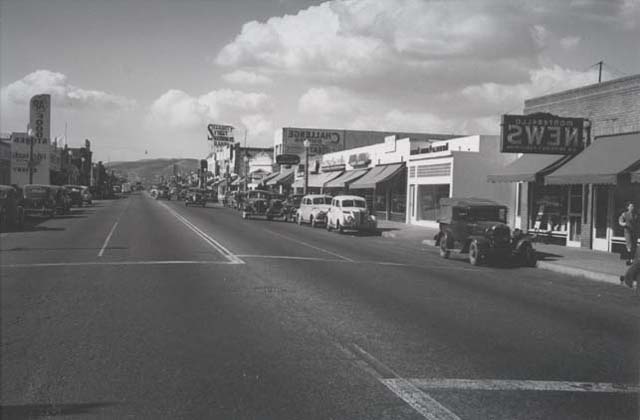
Pico Rivera street scene
Pico Rivera street scene, 1940s [Courtesy of the Pico Rivera History and Heritage Society Museum]
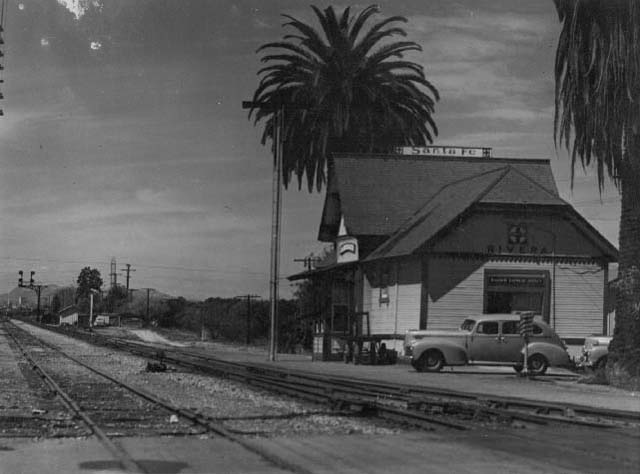
Depot in Pico Rivera
Depot in Pico Rivera, 1940s [Courtesy of the Pico Rivera History and Heritage Society Museum]
First Pico Rivera City Hall
First Pico Rivera City Hall, c. 1958 [Courtesy of the Pico Rivera History and Heritage Society Museum]

Frequently Asked Questions

1. What can you tell me about the early years of Pico Rivera?

The origins of what is now Pico Rivera date back prior to California’s joining the Union in 1850, when the state’s territory was still under Mexican rule. Today’s property ownership has evolved from purchases made then of Rancho Paso de Bartolo by Pio Pico, a political rebel who became California’s last governor under Mexico, and Rancho Santa Gertrudes by Doña Josefa Cota, widow of Don Antonio Maria Nieto. In 1855, Oliver Perry Passons became the first American to own property in the area when he bought 100 acres. Among the earliest settlements in the area were Gallatin (now part of Downey), an area known as Ranchito, the so-called Barton ranch, and a farming community known as Maiseland for its corn crop. The building of railroad lines in the 1880s prompted the official start of the communities of Pico and Rivera.

2. What can you tell me about the agriculture of Pico Rivera?

From their origins in the mid-1800s through the mid-1940s, Pico and Rivera-the towns that later became the city of Pico Rivera-flourished as agricultural communities with the help of fertile soil between the Rio Hondo and San Gabriel rivers and a water table near the surface of the land. In fact, the earth was so rich that fence posts cut from willow trees were reported to have sprouted and grown into trees themselves! Cattle ranching had been the dominant agricultural undertaking prior to the Civil War, but that ended with a severe drought from 1862 to 1865 which forced the breakup of large farms into smaller parcels. Farmers then grew corn and grapes for wine-making, and starting in 1875 added walnuts, which soon overshadowed other crops as the dominant agricultural product-to the point where the first walnut shipment out of California took place in Rivera. Their growth and export dropped off after the start of the twentieth century due to disease, insects, and a dropping water table. Around that time orange groves stated to supplant walnut trees, and avocados also started being cultivated in the region. The prime farmland that characterized the Pico Rivera area started to be usurped by housing developments after World War II as the state’s population grew, and barns and silos were replaced by homes, schools, and churches.

Pico Rivera – City History

3. What can you tell me about the railroads and their contribution to the development of the area that became Pico Rivera?

Pico Rivera owes its existence to the extension of railroad lines in California in the late nineteenth century. The two communities of Pico and Rivera-which made up what is today’s city – came into being in the 1880s with completion of rail lines for the Union Pacific and Atchison, Topeka, and Santa Fe railroads. The first passenger train reportedly arrived in the area in 1887, with residents traveling by buggy and wagon to meet it.

4. What was the inspiration for the names Pico and Rivera?

The names for the original communities of Pico and Rivera were inspired, respectively, by a prominent early settler in one and the geographical qualities of the other. Pio Pico in 1845 became governor of California, the last Mexican governor before the state entered the Union in 1850, and he was the original landowner of the town of Pico. Rivera, the northernmost of the two communities, was so-named for its location between the Rio Hondo and San Gabriel rivers.

Pio Pico

Rivers of Los Angeles County

LA Almanac – City of Pico Rivera

5. What can you tell me about Pio Pico?

Pio de Jesus Pico, later known as “Don Pio Pico,” was California’s last governor under Mexican rule before the state joined the Union in 1850. He was born to parents who traveled from Mexico to California with Captain Gaspar de Portola’s party of several hundred people, which arrived at the San Gabriel Mission in the mid-1770s. While still a boy supporting his family after his father’s death, Pico became interested in politics after observing citizens standing up to military officials on the grounds that they were entitled to citizens’ rights. He became a member of a representative citizens’ group called the disputacion, and in 1831 led a revolt against Governor Victoria, emerging victorious enough to be made temporary governor. From then on his power, influence, and monetary worth grew in southern California, and following a series of battles between his rebels and the armies of Monterey governors he was again made governor of California. Following unsuccessful efforts to thwart the United States invasion and conquest of California, Pico channeled his energy into starting banking, education, and municipal organizations and institutions.

He was instrumental in the startup of what became the Standard Oil Company of California, served on the Los Angeles City Council, and built the Pio Pico mansion. Fate struck him a cruel blow in 1883, when he signed what he thought was a property loan that instead defrauded him of all his property, which at the time was valued at about $200,000. Though he sued for damages and won at the State Supreme Court level after seven years of court battles, he received no financial compensation and became destitute at age 91. He died at his daughter’s home in Los Angeles on September 11, 1894. Today his name lives on in state parks, schools, roads, and other entities named after him, and his mansion-deeded in 1914 to the state of California-has since been restored.

Pio de Jesus Pico

6. What can you tell me about the evolution of the separate communities of Pico and Rivera to the city of Pico Rivera?

Rapid and sweeping post-war development in the rural towns of Pico and Rivera laid the groundwork for their merging into one city that combined both names. Pico and Rivera began separately in the 1880s with the construction of rail lines through the region, and then grew slowly through the mid-1940s. With a population surge after World War II, developers bought out farmland and subdivided it for houses and other building. As the population grew and local landmarks and farmland gave way to new construction, families from both communities grew closer and their civic duty strengthened, and by the mid-1950s many residents of Pico and Rivera decided they wanted to incorporate as one municipal entity.

In the spring of 1957 residents circulated a petition to incorporate, and on January 7, 1958 – despite fierce opposition to the idea from some people – 56 percent of the voters of Pico and Rivera voted to incorporate as one community. A similar battle ensued over the name of the new municipality, with some favoring the name “Serra City,” but following a public ballot to resolve the issue the name Pico Rivera was chosen. A Council-Manager form of city government was approved, five people were chosen to serve as the first City Council members, and on January 29, 1958, Pico Rivera was incorporated as Los Angeles County’s 61st city.

Today, the population of fast-growing Pico Rivera exceeds 65,200 people over more than eight square miles, and by 2002 the population base is expected to increase by 21 percent from its 1980 level.

Pico Rivera – City History

7. What can you tell me about the Native Americans who originally populated the area that is now Pico Rivera?

The first Native Americans to live in the region were the Awignas, later called Gabrielinos by Spanish settlers who first arrived around 1770 and named them after the San Gabriel Mission. Prior to the arrival of Anglos, the Gabrielinos were one of the wealthiest, most powerful, and most influential group of Native Americans in southern California. They lived in the general watershed areas of the Los Angeles basin; the Los Angeles, San Gabriel, and Santa Ana rivers; streams in the Santa Ana and Santa Monica mountains; coastal land between Aliso and Topango creeks; and San Clemente, San Nicolas, and Santa Catalina islands.

The Awignas who inhabited the area near what is now Pico Rivera lived in villages dotting the banks of San Jose Creek and stretching south from what is now the Pio Pico Mansion, inhabiting conical dwellings made of reeds, tule, and willows. Though the Native Americans did not live in the often-flooded lowlands of the San Gabriel Valley, they lived off the plentiful ducks, geese, rabbits, berries, and black honey made by bees that burrowed into the ground there, as well as seeds and nuts they found in nearby hills. The Awignas bestowed upon Pico Rivera the greatest honor of all by claiming that this was where the world began, calling it Sejat for “the place where the bees burrowed in the ground.” These legends were recorded in 1841 by Father Geronimo Boscano as part of a sweeping oral history project with native Americans. During the twentieth century, Smithsonian Institution researcher John P. Harrington found a possible riverbank site – in what is now Pico Rivera – that is the alleged location of Sejat.

Gabrielino Tongva Springs Foundation

8. What can you tell me about the arrival of white settlers to the region that is now Pico Rivera?

The first white men to arrive in the region came through on January 18, 1770, in an expedition looking for Monterey Bay. Less than two years later, the Awigna’s bucolic life ended for good on September 8, 1771, when European priests and soldiers arrived to spread Christianity, established the San Gabriel Mission, and renamed the Native Americans the Gabrielinos. The Anglo newcomers abused the Native American population which led to fatal confrontations and, especially, the violent death of the local Indian chief.

Several years later, in the mid 1770s, Spanish soldier Juan Bautista de Anza was hired by the Spanish government to find a route across the desert from Mexico to California. Anza’s party reached a Yuma Indian village, where he encountered a Native American named Sebastian Tarabal who had run away from the San Gabriel Mission and was on the verge of dying in the desert when the Yumas found him. In a bitter twist of fate for Tarabal, he ended up guiding the Anza party back to the very mission from which he had fled, and in the process helped Anza open up a trade route that immediate drew settlers to California.

In 1784, Jose Manuel Nieto – a soldier in Captain Gaspar de Portola’s reconnaissance expedition – received from the Spanish crown a reward of 300,000 acres for cattle grazing between the Santa Ana and San Gabriel rivers. About 20 years later, Juan Crispin Perez started grazing cattle on the property, and following Nieto’s death successfully petitioned in 1833 for the property. Following Perez’ death in 1846, Pio Pico bought the property – greatly reduced in size from Nieto’s vast acreage – for $4,642. In 1852 Pico built an adobe house that he named El Ranchito, much of which remains part of today’s Pio Pico Mansion. Pico later sold some parcels to new settlers and lost the rest in a court battle in the 1890s.


Juan Bautista de Anza National Historic Trail

LA County seal

County of Los Angeles

Do You Need Help?
211 LA County
Public Alerts
Cooling Centers

SITE INFO

Accessibility
Language Access Support
Disclaimer
Privacy Policy
All Library Policies

ABOUT US

About the Library
Library Holidays
Strategic Plan
Career Opportunities
Public Records
Library Commission
Solicitations
Statistics
Land Acknowledgment
Civic Resources

CONTACT US

Email - Ask a Librarian
Text/Chat (M-F 12 pm - 6 pm)
Recommend a Title for Our Collections
Film at a Library
Performer and Presenter Application
Press Room
Support Us
Volunteer
Join a Friends Group
Donate
CONTACT US
LACOUNTY.GOV
  • My Account
  • GET A LIBRARY CARD
    • GET A NEW CARD
      • Digital Library Card
      • Library Cards & Your Account
      • Library Card Application (English / Spanish)
      • Library Card Application (English / Chinese)
      • Get a PIN
      • Get notices by email
      • Frequently Asked Questions
    • Library Policies
      • Library Cards & Your Account
      • Borrowing Materials
      • Computer & Wi-Fi Access
      • Collection Policy
      • Customer Expectations
      • Guidelines for Use of Meeting Rooms
      • Guidelines for Use of Study Rooms
      • Social Software Policy
      • Language Access Support
      • Privacy Policy
  • Digital Library
    • Explore
      • eBooks & Audiobooks
      • Movies & TV
      • Music
      • Newspapers & Magazines
      • Freegalmusic
      • Hoopladigital media
      • Kanopydigital media
      • Libby, by OverDriveebooks and magazines
      • PressReaderdigital magazines
    • Learn
      • Online Learning
      • Brainfuselive tutors
      • Earn your High School Diploma
      • Gale Coursesinstructor-led
      • Learn Basic Tech
      • Learning Expresstest prep
      • LinkedIn Learning (formerly Lynda.com)video classes
      • Mangolanguages
      • Leamosliteracy
      • Universal Classinstructor-led
    • Research
      • BiblioBoard Community Collections
      • Databases
      • Digital Collections
      • Magazines
  • LOCATIONS
  • BOOKS & WRITING
    • SEARCH THE CATALOG
    • Getting Started
    • Booklists
    • Recommend a Title for our Collections
    • More Books to Explore: Suggestions Just for You
    • Books by Mail
    • NoveList Plus
    • Writers’ Corner
    • Tell Your True Tale
  • Teens & Kids
    • Teens
      • Teens
      • Virtual Programming
      • Activity Ideas for Teens
      • Book Reviews by Teens
      • Students
      • Volunteer
    • Kids
      • Kids
      • Virtual Programming
      • Activity Ideas for Kids
      • Students
      • Online Resources
    • Parents & Families
      • Students
      • Early Learners
      • Healing Library Kits
      • Parent Support & Resources
      • Activity Ideas for Early Learners
      • Kids’ Fine Reduction: Great Read Away
      • Virtual Programming
  • Resources
    • Programs
      • Books for Jails
      • Business Resources
      • Citizenship
      • Earn Your High School Diploma
      • LGBTQ+ Pride
      • My Brother’s Keeper Peer Advocates
      • Tools for Job Seekers
      • Work Ready: Borrow a Laptop & Learn Job Skills
      • Older Adults
    • Services
      • Connect to Tech
      • COVID-19 Antigen Tests
      • Discover & Go
      • Federal Government Documents
      • Hotspot Loans
      • MākMō
      • Metro TAP Cards
      • Park & Connect
      • Printing
      • Request a Room
      • Special Collections
      • State Parks Passes
      • Tax Info
      • Tool Lending Library
      • Vaccine Clinics
      • Veterans Connect
      • Wi-Fi
    • Cultural
      • American Indian Resource Center
      • Asian Pacific Resource Center
      • Black Resource Center
      • Chicano Resource Center
      • Faith, Culture, & Community
    • Local History
      • Agoura Hills
      • Antelope Valley
      • Carson
      • Catalina Island
      • Claremont
      • East Los Angeles
      • Gardena
      • Lakewood
      • La Puente Valley
      • Malibu
      • Pico Rivera
      • San Dimas
      • San Fernando
      • San Gabriel
      • South Gate
      • Willowbrook
  • EVENTS
    • Virtual Programming
  • Donate
×
  • Search the Catalog
  • Search the Website
Advanced
Search
Search

Downloads and Streaming

Digital Media

With your LA County Library card, you can download or stream eBooks, eAudiobooks, magazines, music, and movies on your computer, tablet, or phone. It's free and you'll never have to worry about overdue fines!

You'll need a library card in good standing and a PIN to access most downloadable & streaming content.

  • ebooks
  • audiobook icon
  • music icon
  • magazine icon
  • movie icon

Kindle Paperwhite eReader

eReaderBanner

Welcome to a New Way to Read...

Have you walked into a library and wished you could check out more books than you could possibly carry? Check out a Kindle Paperwhite at participating libraries with a collection of titles that you are sure to enjoy. Each Kindle has been loaded with expert-selected books.

You don’t need internet access - all the books are pre-loaded onto the Kindle so you are ready to read.

  • Three week checkout
  • Renew up to 3 times, as long as no one else is waiting
  • Must be 18 or older (or under 18 with parent permission)
  • eBooks cannot be added to this device by user

How do I get one?

  • Visit a participating library to check out or place a hold on a Kindle Paperwhite. Kindles are not sent to other libraries for pick up.
  • Note: Selection of genres varies per library. Click on a library below to see the list of genres.

Library Locations with eReaders

Click on the library to view list of genres available.

Many of our libraries offer enhanced resources, computers, and online services to support your homework needs. Check with your local library!

Family Place

What is Family Place?

A Family Place Library is a center for early childhood information, parent education, emergent literacy, socialization, and family support. Family Place builds on the knowledge that good health, early learning, parent involvement, and supportive communities play a critical role in young children's growth and development. Each Family Place Library features the following core elements:

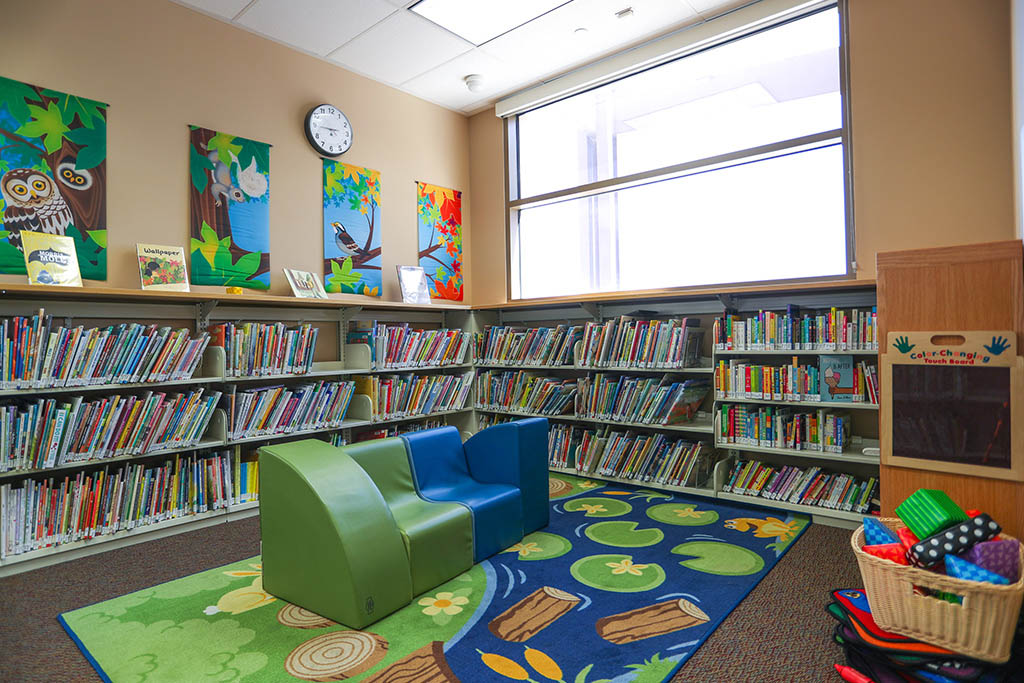
  • A bright, colorful, and welcoming space for young children and their parents.
  • A collection of books, toys, videos, music, and other materials for babies, toddlers, parents, and service providers
  • Access to resources that emphasize emergent literacy, reading readiness, and parent education.
  • Developmentally appropriate programming, such as baby and toddler storytimes for younger children and their parents.
  • Outreach to new and underserved populations.
  • The Parent-Child Workshop is a five-week workshop featuring local professionals, such as nutritionists, speech and language therapists, and child development experts, who serve as resources for parents.

The first three years of a child's life lay the foundation for learning. Get the tools and resources you need to give your child the best possible start.

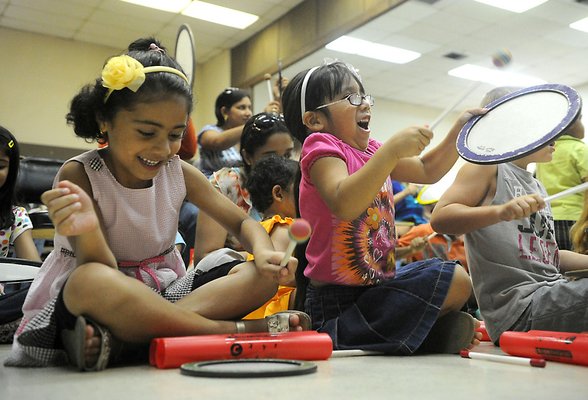
Family Place Library Children playing music in Family Place Library

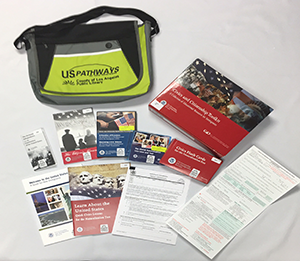
citizenship in a bag

Citizenship-in-a-Bag contains:

  • Settlement information for new immigrants to the United States
  • Information on the U.S. naturalization process;
  • Study materials for the naturalization test
  • Reference materials on the rights and responsibilities of U.S. citizenship
  • Multimedia tools including DVDs and an audio CD
  • Teaching guides and planning resources
  • flash cards and books

Checkout or place a hold on a Citizenship-in-a-Bag toolkit.

Great! Thank you for sharing your photos with Catalina PhotoShare, a community history project of LA County Library.

Your photos will be reviewed and if they meet the criteria, they will be added to the Catalina PhotoShare online collection.

If you have any questions, please contact: digitalprojects@library.lacounty.gov

Terms of Service and Laptop Library Locations

Laptops in this kiosk can be checked out by customers with a LA County Library card in good standing.  The laptop is due back in the kiosk before the library closes on the same day it is checked out.

If you do not return the laptop to the kiosk on the same day you check it out, your library account will be charged the full replacement cost of the laptop.

When you check out a laptop from this kiosk, you agree to use it within the library only.  If you remove the laptop from the library, you may held criminally responsible for theft of the laptop and/or be charged the full replacement cost of the laptop.

You are responsible for the laptop and you agree that you will reimburse the LA County Library for any damages if the laptop is damaged, lost or stolen while checked out to you.

If you check out a laptop and it is damaged, you will give it to library staff immediately.

You must save to a removable storage device (such as a USB drive) since your work will not be saved to the laptop beyond your current checkout.

LA County Library will not be held responsible for any damage or loss of data or media due to any cause while you are using a laptop from this kiosk.

By using this laptop, you must adhere to the Library’s Acceptable Use Policy. Laptops are available at the following libraries:

A C Bilbrew Library

Artesia Library

Culver City Julian Dixon Library

Clifton M Brakensiek Library

East Los Angeles Library

El Camino Real Library

La Mirada Library

La Puente Library

Leland R Weaver Library

Manhattan Beach Library

Paramount Library

Quartz Hill Library

Sorensen Library

South El Monte Library

South Whittier Library

Temple City Library

View Park Bebe Moore Campbell Library

Walnut Library

West Hollywood Library

Willowbrook Library

Consumer Health Information Program

The Consumer Health Information Program assists the public with medical research by providing information from reliable sources. Customers are invited to use the Norwalk Library collection which consists of books, magazines, videos, and online databases related to health topics. We also provide individualized research services.

Please be aware, we do not provide medical advice, nor are the materials we provide a substitute for a professional medical opinion.

What Can We Do for You?

We can provide you with information on topics such as:

  • Medical conditions or diseases
  • Prescription medications
  • Surgical procedures
  • General physician and hospital information
  • Book and website recommendations for further reading

How to Contact Us

Location: Norwalk Library

Phone: (562) 868-4003

Fax: (562) 868-4065

Email: chips@library.lacounty.gov

Online Resources

Health Databases *

Health & Fitness eBooks and Audiobooks *

LA County Library Californiana Collection

Accessing the Collection

The Californiana Collection is in closed stacks at the Norwalk Library located at 12350 Imperial Hwy, Norwalk, CA 90650.

About the Collection

The Californiana Collection consists of over 24,000 books and over 200 magazine and newspaper titles in paper and on microfilm as well as a collection of state documents including state and county budgets. The goal of this collection is to present a complete picture of the history, culture, environment and artistic expression of the people of California and to some extent, the western United States.

Collection Highlights

  • California Census Schedules from 1850 to 1910
  • Copies of The Alta California newspaper 1849-1891, as well as dozens of other 19th century newspapers from Gold Rush boomtowns, the Owens Valley and San Francisco
  • The Los Angeles Star newspaper 1851-1879
  • City directories dating from the 19th century
  • Official city and county histories from the 19th and 20th centuries
  • Materials on the Donner Party, California water projects, famous California crimes, Hollywood culture, biographies of Californians, pioneer narratives of the early days of California, and histories of the state written over the course of 150 years