MY ACCOUNT
DONATE
SEARCH
LA County Library Logo
MY ACCOUNT
DONATE
SEARCH
  • GET A LIBRARY CARD
  • LOCATIONS
  • BOOKS & MATERIALS

    • Search Catalog
    • Booklists
    • Special Collections
    • Recommend A Title
    • Customized Recommendations
    • Books by Mail

    DIGITAL LIBRARY

    • eBooks & Audiobooks
    • Movies & TV
    • Music
    • Newspapers & Magazines

    MORE TO BORROW

    • CA State Parks Passes
    • Hotspot Loans
    • Tools & Musical Instruments
    • Museum Passes
    • Board Games
    • Seeds

    HELP

    • Getting Started Using the Online Catalog
    • Borrowing Materials
    • Download the Library Mobile App
    • Frequently Asked Questions
    • Events Calendar
    • Virtual Programs
    • Virtual Author Talks
    • YouTube Channel
  • RESEARCH

    • Databases
    • Special Collections
    • Digital Collections
    • Biblioboard Community Collections
    • Local History
    • Transcribe Letters
    • Federal Government Documents

    LEARN

    • Online Learning
    • Earn Your High School Diploma
    • Reading & Writing for Spanish Speakers
    • Learn Basic Tech
  • EXPLORE BY INTEREST

    • Cultural Resource Centers
    • Business & Career
    • Citizenship & Immigration
    • Faith, Culture, and Community
    • LBGTQ+ Pride
    • Parenting
    • Tax Informatiom
    • Veterans
    • Writers

    EXPLORE BY AGE

    • Early Learners
    • Kids
    • Teens
    • Students
    • Emerging Adults
    • Adults
    • Older Adults
  • CONNECT TO TECH

    • Wi-Fi
    • Hotspot Loans
    • Public Computers
    • Wireless Printing & Copies

    MOBILE FLEET

    • Bookmobiles
    • MākMō

    COMMUNITY

    • Reserve Meeting & Study Rooms
    • Emergency & Disaster Preparedness
    • Health & Wellness
    • Legal Resources
    • Books for Jails
    • Little Libraries
    • Metro Tap Cards
    • My Brother's Keeper Peer Advocates
    • EV Charging Locations
    • LA County Departments
All LA County Library locations will be closed on Monday, January 19 in observance of Dr. Martin Luther King, Jr. Day. Our Digital Library is open 24/7.

Catalina Island

Community History

One of the southern Channel Islands, Santa Catalina lies the closest of the group to mainland California. Its rugged landscape boasts peaks reaching 2,000 feet above sea level, while its beaches are limited, adhering primarily to the mouths of canyons. The tiny island has nevertheless been inhabited for nearly 7,000 years, with its original Native American occupants probably having paddled their plank canoes from the mainland’s shores to settle the rocky land mass and develop a marine-based culture.

The Spanish explorer Juan Rodriguez Cabrillo became the first European to visit the island in 1542. During the next several centuries, other Spaniards stopped at the island, but it was not until the late 1700s that life was dramatically altered for the island’s native peoples, when Spanish colonization of the California coast began in earnest and most of the island’s population, by choice or compulsion, relocated to the mainland during the following decades.

In 1846, shortly before the United States assumed control of California and its islands, the Mexican government granted ownership of the island to a private citizen. Changing hands a number of times during the late 1800s and early 1900s, the island has belonged to the Wrigley family since 1919. Settlers on Catalina Island raised sheep and cattle in the mid 1800s, introducing a ranching industry that continued in some form until the mid 1950s. Mining and the occasional use of the island by the U.S. government during wartime have also colored its history.

Most importantly for its future, in the late 1880s owner George Shatto embarked on a campaign to turn Catalina Island into a tourist destination, planning and building the town of Avalon as the focal point of the island and hub of this activity. Successive owners have nurtured his idea, constructing hotels, golf courses, and new tourist attractions and encouraging hunting, fishing, and other outdoor pursuits, helping to make Catalina Island the resort it is today.

catalina island museum
learn more about the history of catalina island

Image Gallery

  • Gallery 1
  • Gallery 2
  • Gallery 3
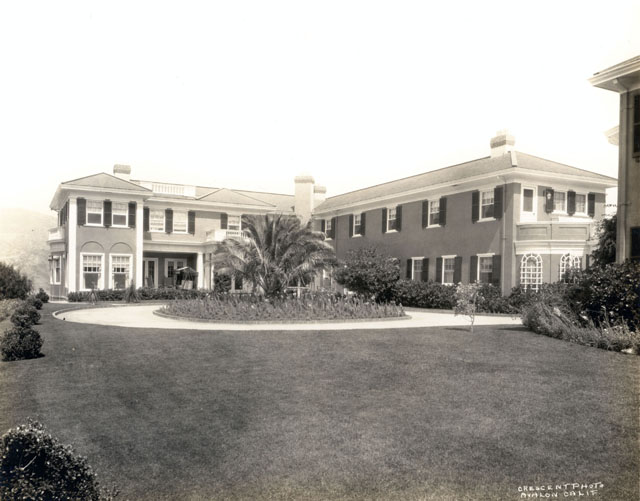
Front garden and façade of Mt. Ada, the home of William Wrigley, Jr., 1930s
Front garden and façade of Mt. Ada, the home of William Wrigley, Jr., 1930s [Courtesy of the Catalina Island Museum]
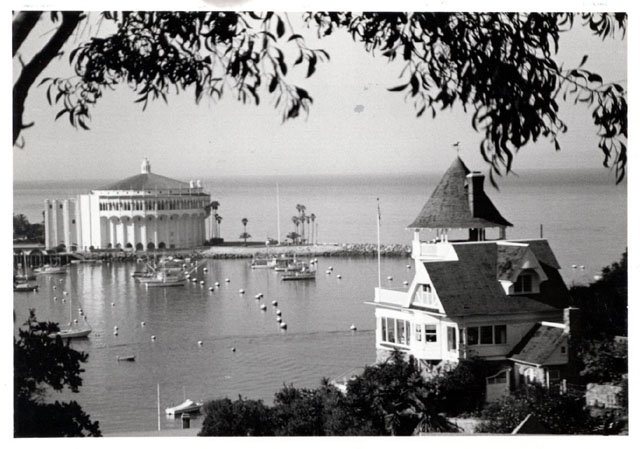
Casino, Avalon Bay, and the Holly Hill House, 1980
Casino, Avalon Bay, and the Holly Hill House, 1980 [Courtesy of the Catalina Island Museum]
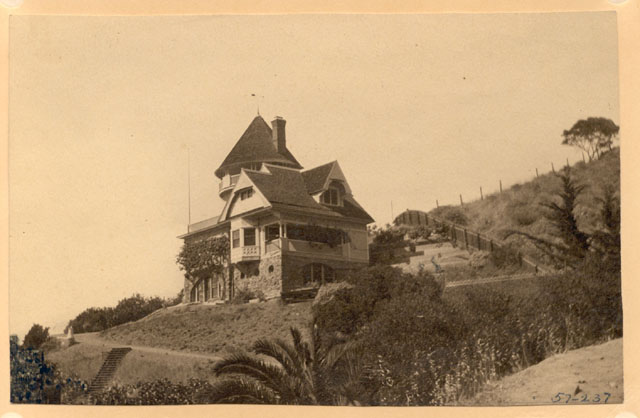
Peter Gano home (first named 'Lookout Cot' and now known as 'Holly Hill House'), 1892
Peter Gano home (first named ‘Lookout Cot’ and now known as ‘Holly Hill House’), 1892 [Courtesy of the Catalina Island Museum]
Zane Gray home overlooking Avalon Bay, c. 1930
Zane Gray home overlooking Avalon Bay, c. 1930 [Courtesy of the Catalina Island Museum]
Front garden and façade of Philip K. Wrigley home overlooking Avalon Bay with the bay in the background, 1930s
Front garden and façade of Philip K. Wrigley home overlooking Avalon Bay with the bay in the background, 1930s [Courtesy of the Catalina Island Museum]
Front garden and façade of Philip K. Wrigley home overlooking Avalon Bay with the bay in the background, 1930s
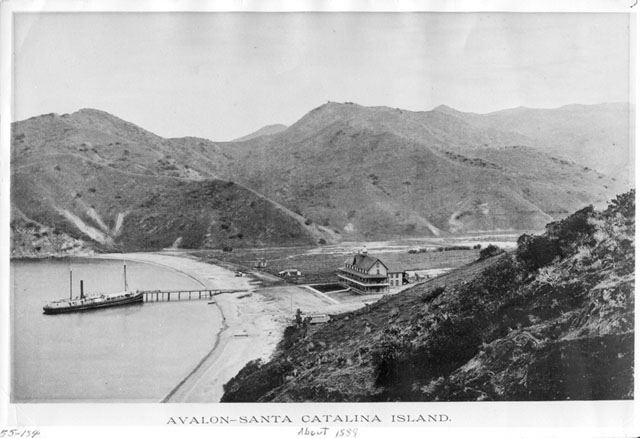
Avalon Bay, the Hotel Metropole, and many tents and cabins in Avalon, c. 1889 [Courtesy of the Catalina Island Museum]
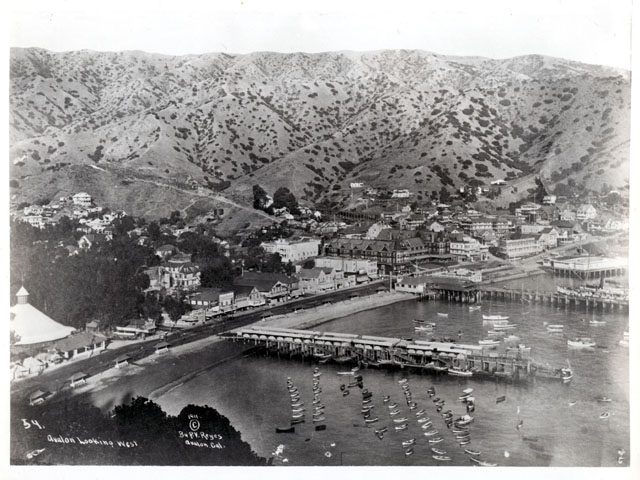
Town of Avalon and Avalon Bay, 1911
Town of Avalon and Avalon Bay, 1911 [Courtesy of the Catalina Island Museum]
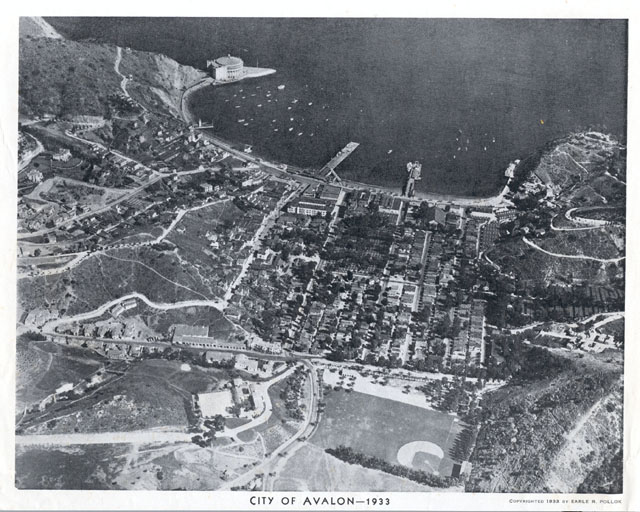
Aerial view of Avalon and Avalon Bay, 1933
Aerial view of Avalon and Avalon Bay, 1933 [Courtesy of the Catalina Island Museum]
Avalon Harbor, c. 1910
Avalon Harbor, c. 1910 [Courtesy of the Catalina Island Museum]
Tuna Club and Avalon Bay, 1984
Tuna Club and Avalon Bay, 1984 [Courtesy of the Catalina Island Museum]
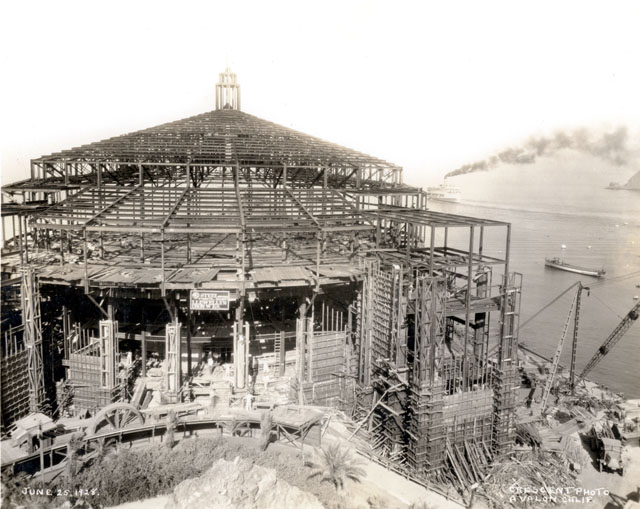
Casino under construction, 1928
Casino under construction, 1928 [Courtesy of the Catalina Island Museum]
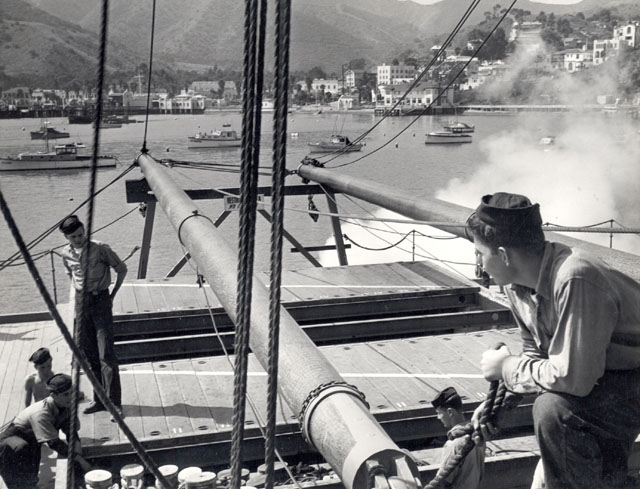
U.S. Maritime Service training in Avalon Bay during World War II, c. 1940s
U.S. Maritime Service training in Avalon Bay during World War II, c. 1940s [Courtesy of the Catalina Island Museum]
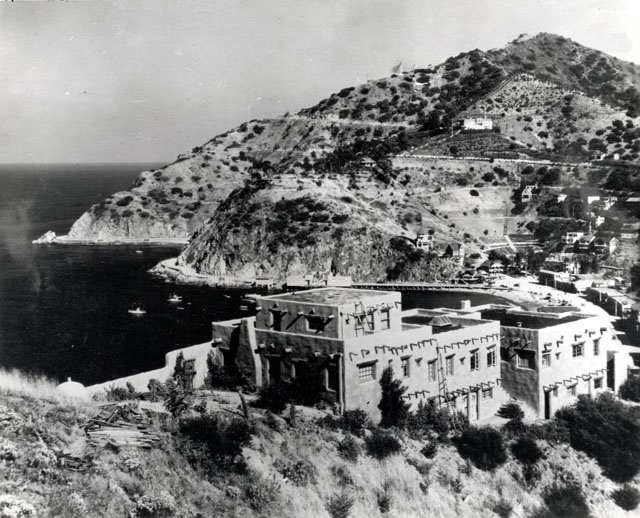
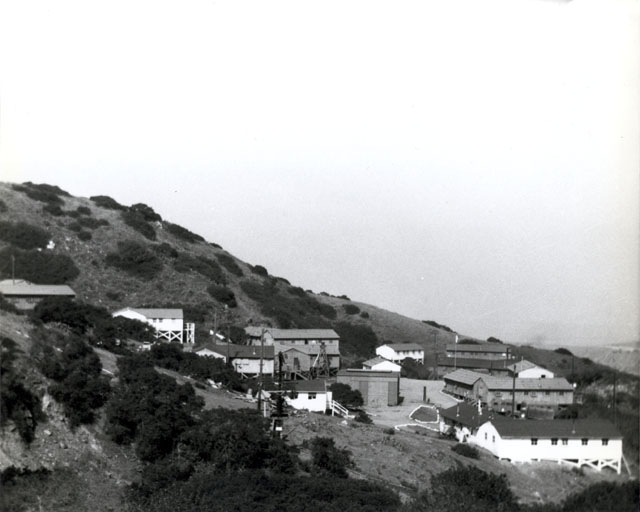
Camp Cactus where U.S. Army Signal Corps trained during World War II, c. 1940s
Camp Cactus where U.S. Army Signal Corps trained during World War II, c. 1940s [Courtesy of the Catalina Island Museum]
Crowd welcoming visitors from steamer upon arrival in Avalon, c. 1941
Crowd welcoming visitors from steamer upon arrival in Avalon, c. 1941 [Courtesy of the Catalina Island Museum]
Catalina Clay Products pottery plant on Pebbly Beach, c. 1930s
Catalina Clay Products pottery plant on Pebbly Beach, c. 1930s [Courtesy of the Catalina Island Museum]
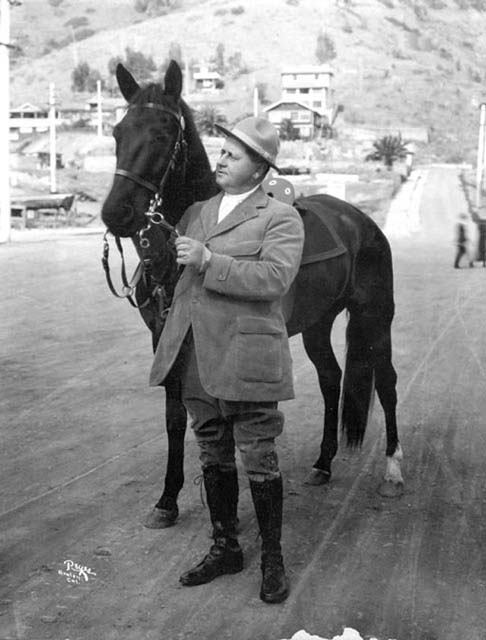
William Wrigley, Jr. holding a horse, c. 1919
William Wrigley, Jr. holding a horse, c. 1919 [Courtesy of the Catalina Island Museum]
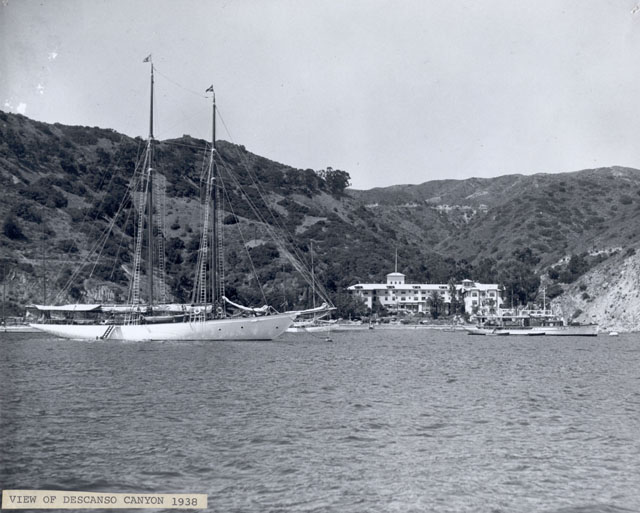
Hotel St. Catherine in Descanso Canyon, 1938
Hotel St. Catherine in Descanso Canyon, 1938 [Courtesy of the Catalina Island Museum]
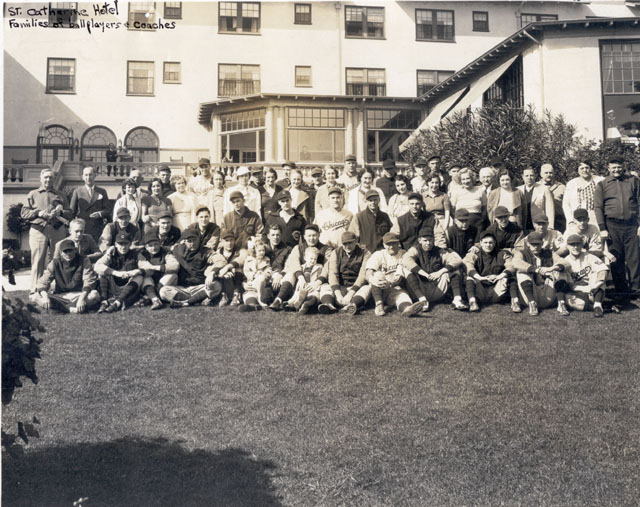
Chicago Cubs team members and their families in front of Hotel St. Catherine, 1933
Chicago Cubs team members and their families in front of Hotel St. Catherine, 1933 [Courtesy of the Catalina Island Museum]
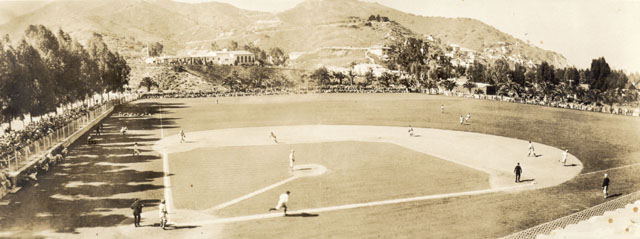
Chicago Cubs training on the baseball field in Avalon Canyon, c. 1930
Chicago Cubs training on the baseball field in Avalon Canyon, c. 1930 [Courtesy of the Catalina Island Museum]
Casino ballroom, c. 1940s
Casino ballroom, c. 1940s [Courtesy of the Catalina Island Museum]
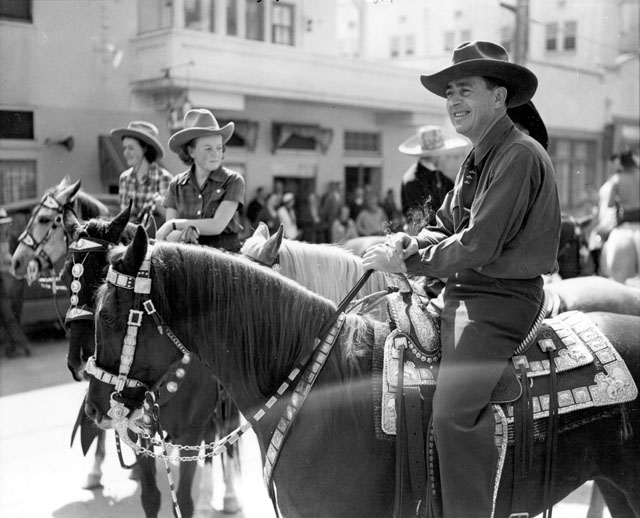
Philip K. Wrigley and his two daughters, Ada Blanche and Dorothy, riding on horseback in Avalon, 1937
Philip K. Wrigley and his two daughters, Ada Blanche and Dorothy, riding on horseback in Avalon, 1937 [Courtesy of the Catalina Island Museum]
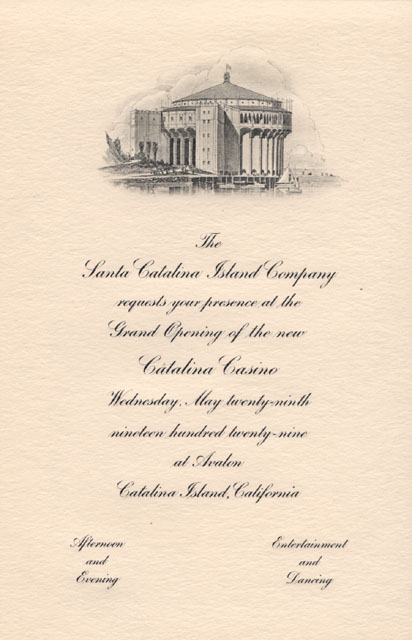
Invitation to opening of the Casino on May 29, 1929
Invitation to opening of the Casino on May 29, 1929 [Courtesy of the Catalina Island Museum]
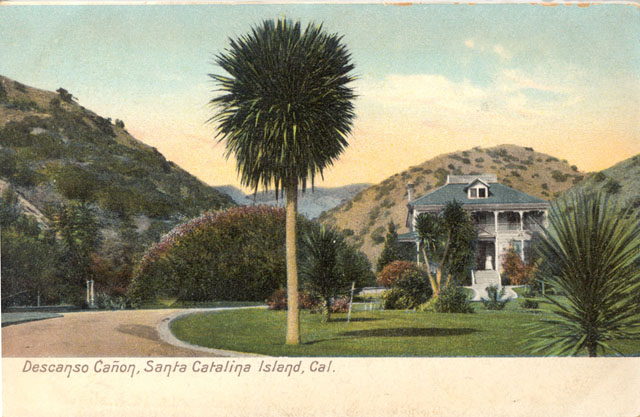
Home of Hancock Banning in Descanso Canyon, c. 1910
Home of Hancock Banning in Descanso Canyon, c. 1910 [Courtesy of the Catalina Island Museum]
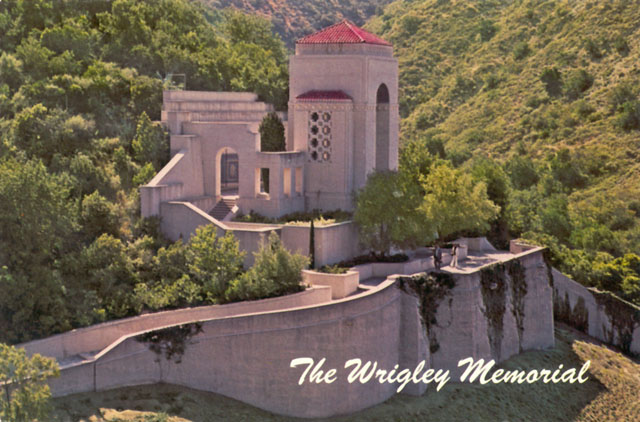
William Wrigley Memorial, c. 1970
William Wrigley Memorial, c. 1970 [Courtesy of the Catalina Island Museum]
Inside of invitation to opening of the Casino on May 29, 1929 containing an engraving of the Casino.
Inside of invitation to opening of the Casino on May 29, 1929 containing an engraving of the Casino. [Courtesy of the Catalina Island Museum]
Mt. Ada and Avalon Bay, c. 1928
Mt. Ada and Avalon Bay, c. 1928 [Courtesy of the Catalina Island Museum]
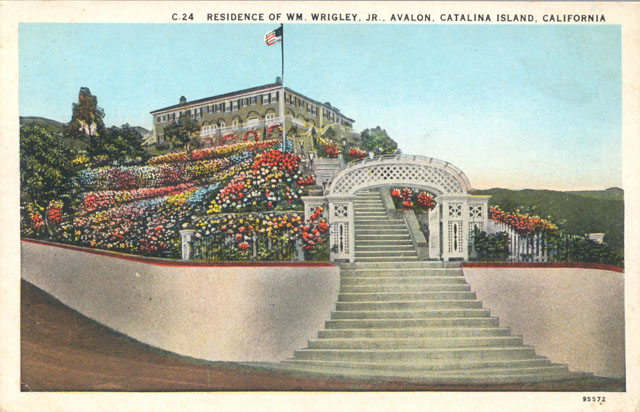
Front steps, flower beds, and Mt. Ada, the home of William Wrigley in Avalon, c. 1930
Front steps, flower beds, and Mt. Ada, the home of William Wrigley in Avalon, c. 1930 [Courtesy of the Catalina Island Museum]
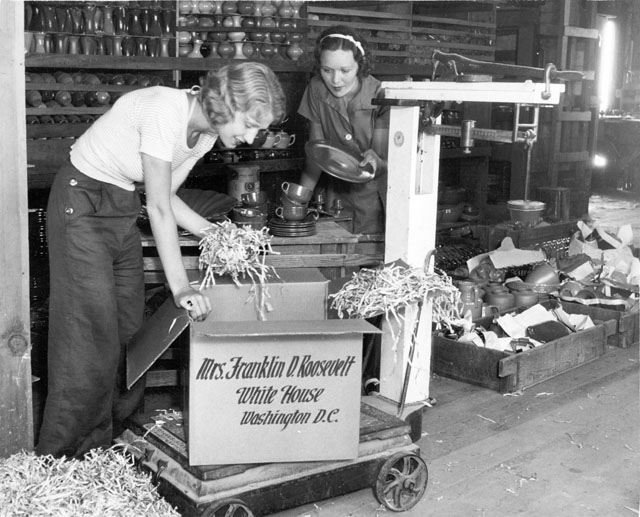
Packing a box with Catalina pottery to be sent to Mrs. Franklin D. Roosevelt, mid-1930s
Packing a box with Catalina pottery to be sent to Mrs. Franklin D. Roosevelt, mid-1930s [Courtesy of the Catalina Island Museum]
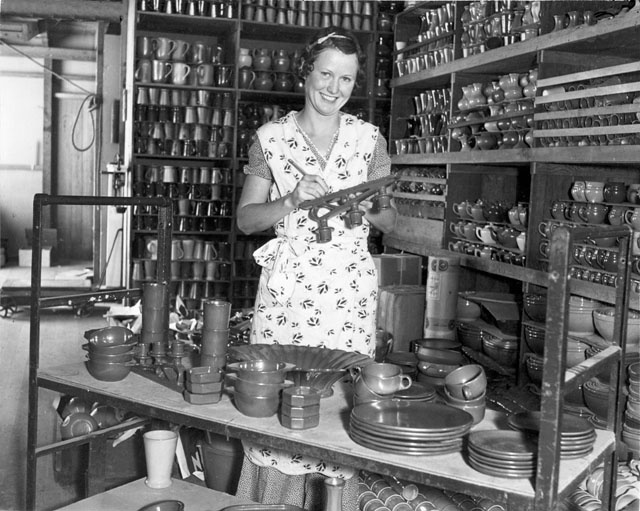
Woman marking pottery in a storage room containing numerous completed pottery items, c. 1930
Woman marking pottery in a storage room containing numerous completed pottery items, c. 1930 [Courtesy of the Catalina Island Museum]
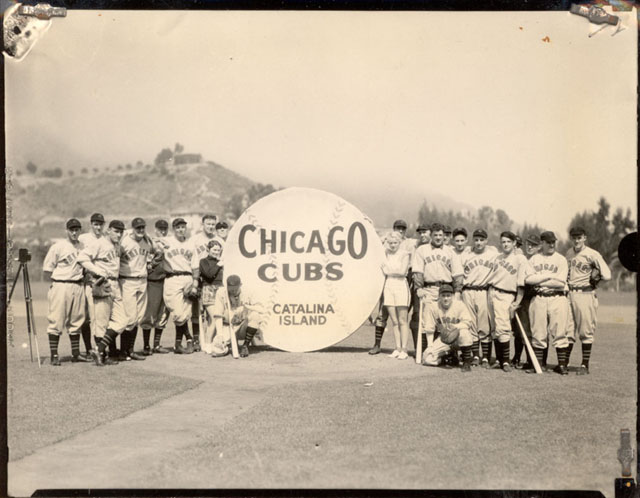
Chicago Cubs team photo on Catalina Island, c. 1930s
Chicago Cubs team photo on Catalina Island, c. 1930s [Courtesy of the Catalina Island Museum]
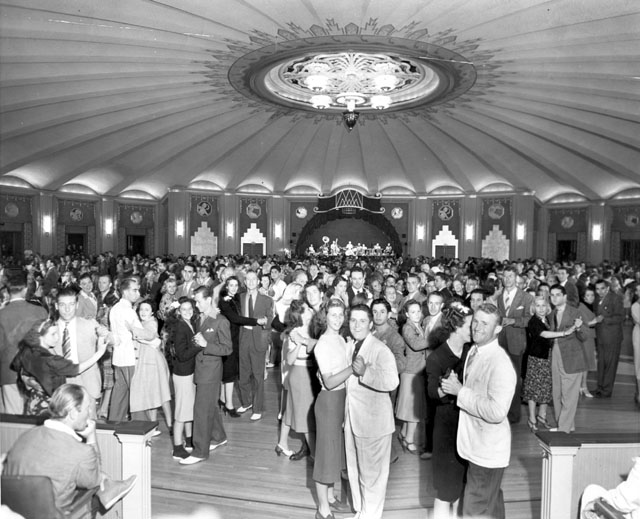
Dancers in Casino ballroom, c. 1940
Dancers in Casino ballroom, c. 1940 [Courtesy of the Catalina Island Museum]
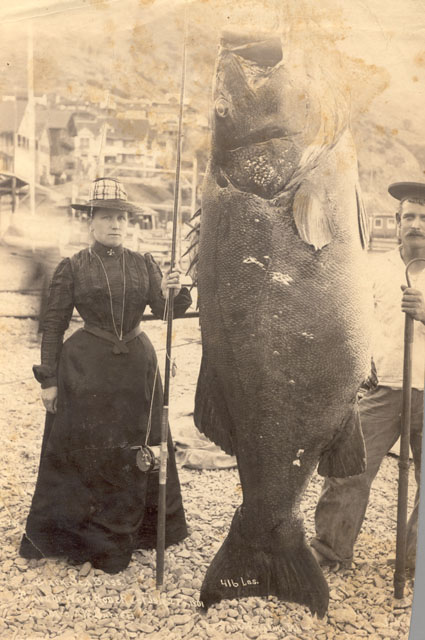
Mrs. A.W. (Pauline) Barrett and boatman Jim Gardner with the black sea bass she had caught, 1901
Mrs. A.W. (Pauline) Barrett and boatman Jim Gardner with the black sea bass she had caught, 1901 [Courtesy of the Catalina Island Museum]
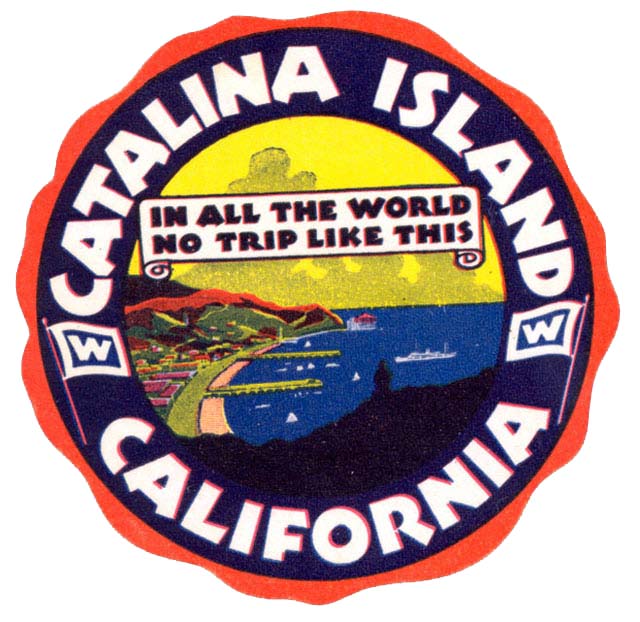
Steamer trunk label showing Avalon Bay, c. 1930s
Steamer trunk label showing Avalon Bay, c. 1930s [Courtesy of the Catalina Island Museum]
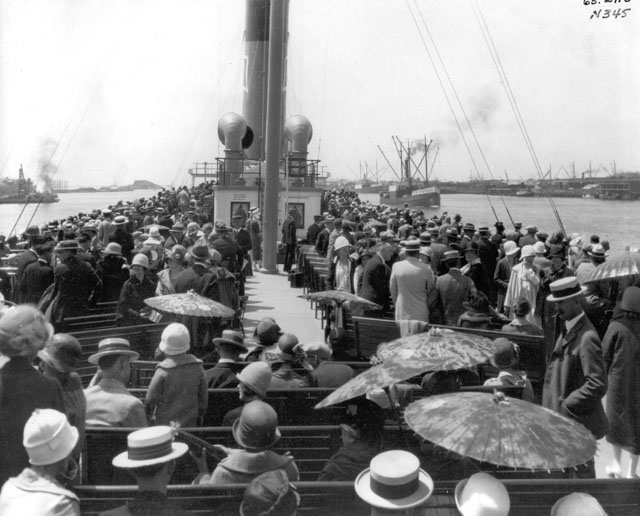
Top deck of the S.S. Catalina filled with passengers as the steamer leaves a Southern California harbor, c. 1920s
Top deck of the S.S. Catalina filled with passengers as the steamer leaves a Southern California harbor, c. 1920s [Courtesy of the Catalina Island Museum]
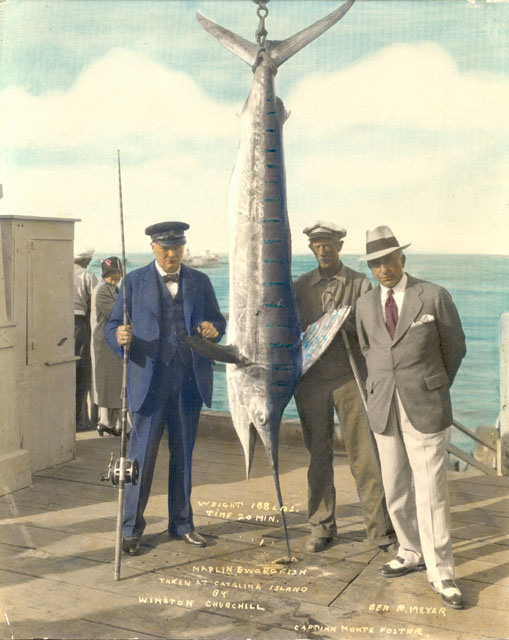
Winston Churchill, Ben R. Meyer, Captain Monte Foster and a Marlin swordfish caught by Winston Churchill, 1929
Winston Churchill, Ben R. Meyer, Captain Monte Foster and a Marlin swordfish caught by Winston Churchill, 1929 [Courtesy of the Catalina Island Museum]
Steamer at the dock in Avalon Bay and the Hotel Metropole in Avalon,
Steamer at the dock in Avalon Bay and the Hotel Metropole in Avalon, c. 1890 [Courtesy of the Catalina Island Museum]
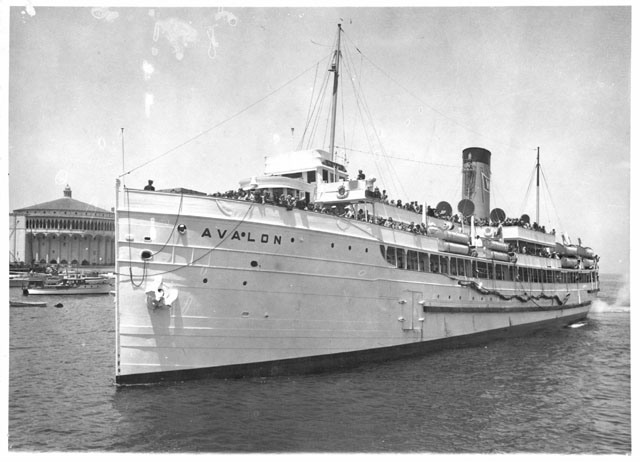
S.S. Catalina with Casino in background, c. 1930s
S.S. Catalina with Casino in background, c. 1930s [Courtesy of the Catalina Island Museum]
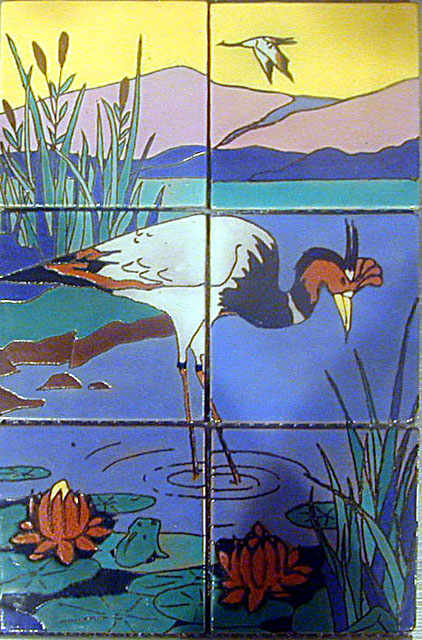
Catalina Island pottery - tiles depicting egret, c. 1930s
Catalina Island pottery – tiles depicting egret, c. 1930s [Courtesy of the Catalina Island Museum]
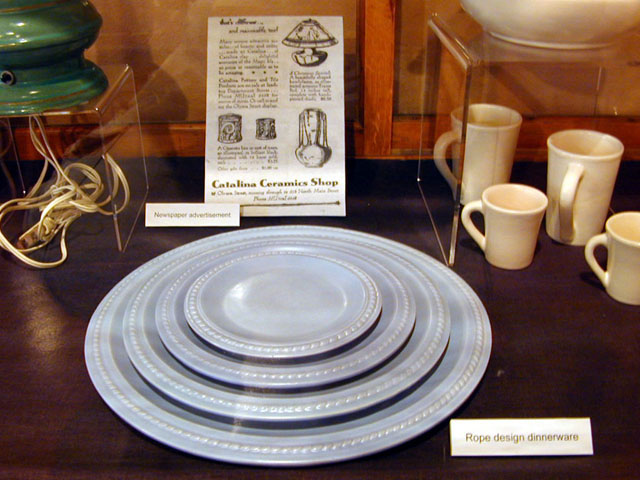
Catalina Island pottery - blue dinnerware in rope design (plates), c. 1930s
Catalina Island pottery – blue dinnerware in rope design (plates), c. 1930s [Courtesy of the Catalina Island Museum]
Catalina Island pottery - tiles depicting two parrots on a branch, c. 1930s
Catalina Island pottery – tiles depicting two parrots on a branch, c. 1930s [Courtesy of the Catalina Island Museum]
Catalina Island pottery - framed tile image depicting a sea plane, c. 1930s
Catalina Island pottery – framed tile image depicting a sea plane, c. 1930s [Courtesy of the Catalina Island Museum]
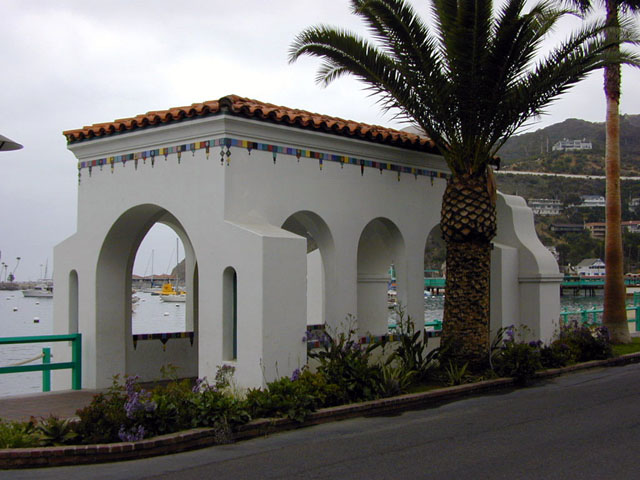
Archway over walkway to Casino, the 'Via Casino,' 2000
Archway over walkway to Casino, the ‘Via Casino,’ 2000 [County of Los Angeles Public Library]
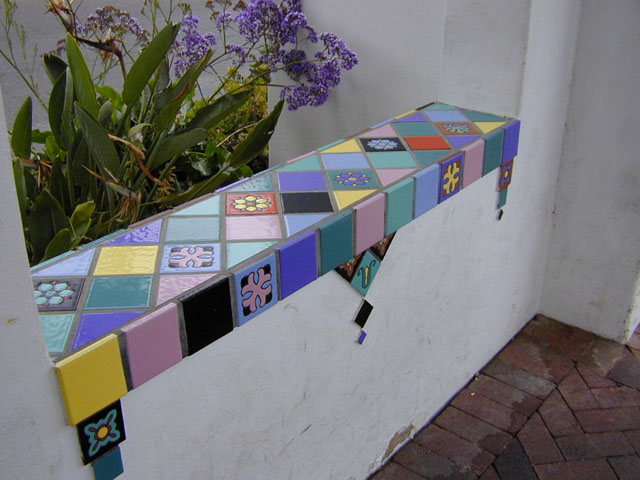
Tile mosaic in archway over walkway to Casino, the 'Via Casino,' 2000
Tile mosaic in archway over walkway to Casino, the ‘Via Casino,’ 2000 [County of Los Angeles Public Library]
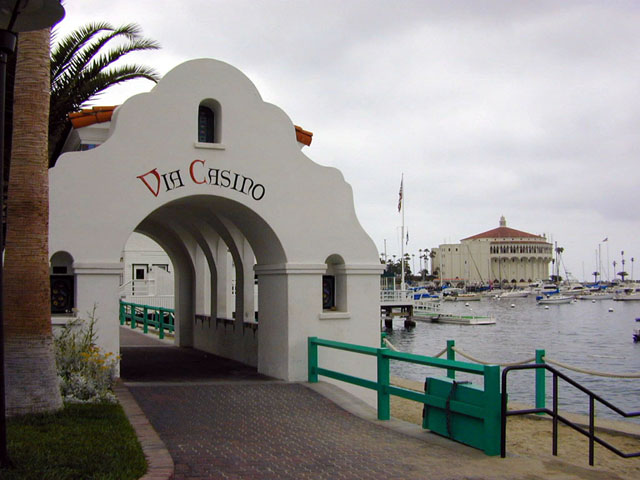
South side of 'Via Casino' archway and Casino, 2000
South side of ‘Via Casino’ archway and Casino, 2000 [County of Los Angeles Public Library]
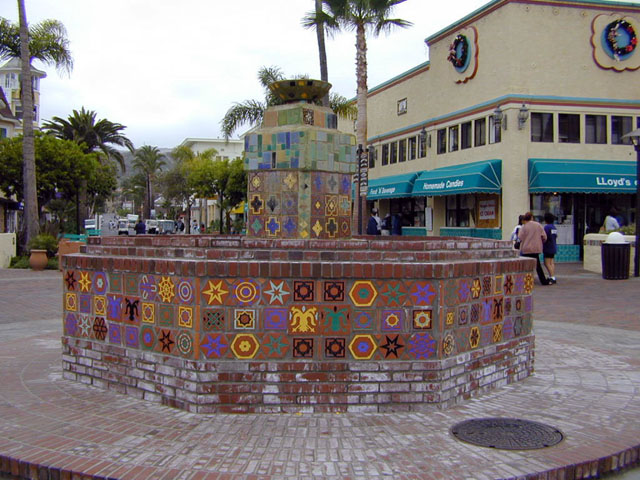
Fountain at intersection of Crescent and Sumner, 2000
Fountain at intersection of Crescent and Sumner, 2000 [County of Los Angeles Public Library]
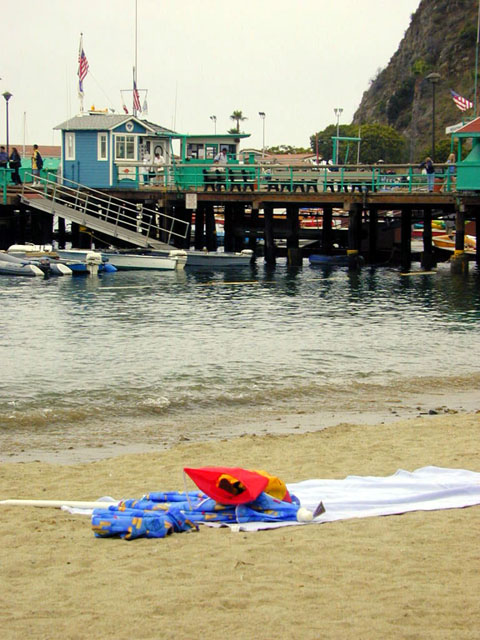
Wharf in Avalon Bay, 2000
Wharf in Avalon Bay, 2000 [County of Los Angeles Public Library]
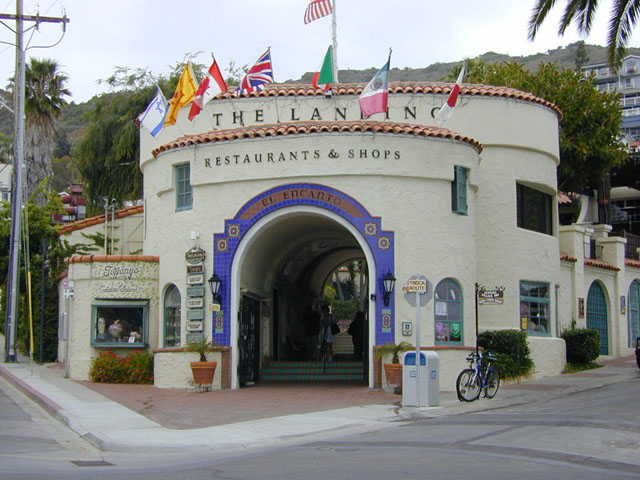
El Encanto, 2000
El Encanto, 2000 [County of Los Angeles Public Library]
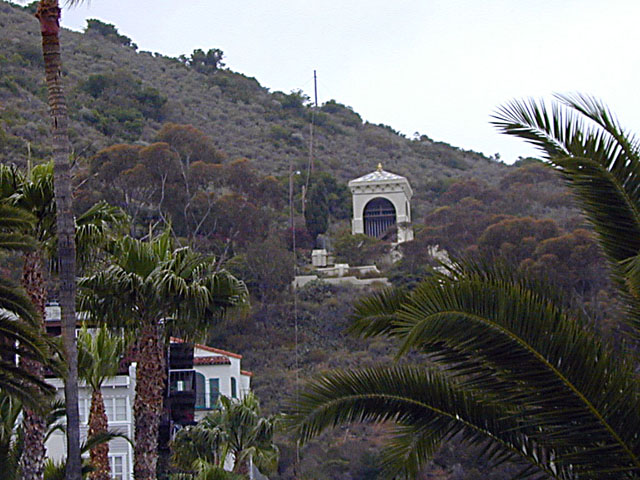
Chime tower, 2000
Chime tower, 2000 [County of Los Angeles Public Library]
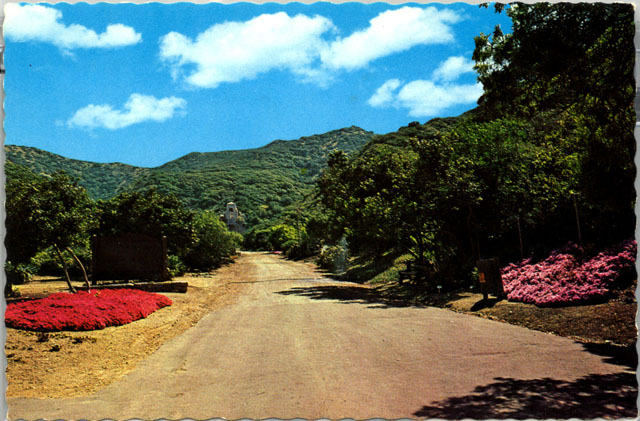
Botanical Gardens in Avalon Canyon, 1974
Botanical Gardens in Avalon Canyon, 1974 [Courtesy of the Catalina Island Museum]
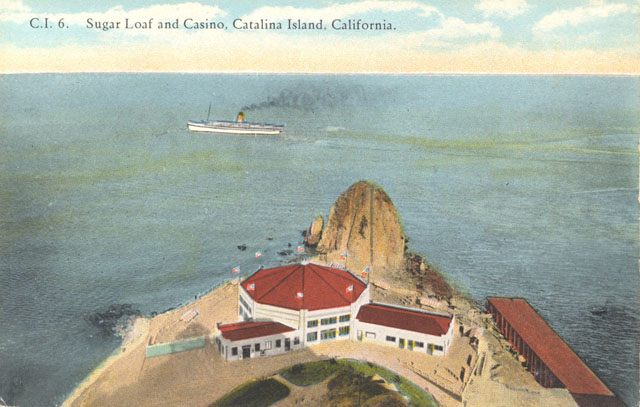
First Casino and Sugarloaf, c. 1920s
First Casino and Sugarloaf, c. 1920s [Courtesy of the Catalina Island Museum]
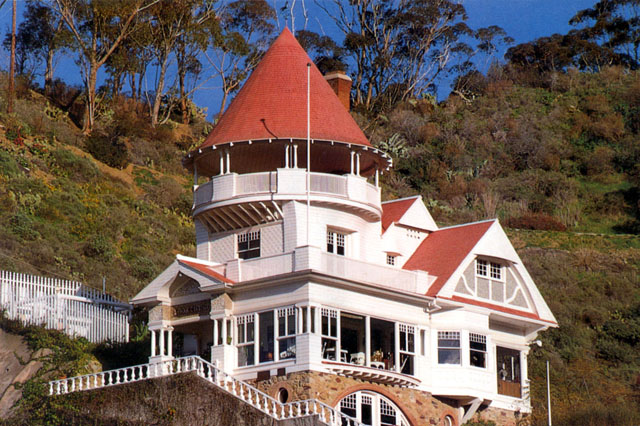
Holly Hill House built by Peter Gano in 1890 overlooking Avalon Bay
Holly Hill House built by Peter Gano in 1890 overlooking Avalon Bay [Courtesy of the Catalina Island Museum]
Hotel St. Catherine in Descanso Bay, c. 1935
Hotel St. Catherine in Descanso Bay, c. 1935 [Courtesy of the Catalina Island Museum]
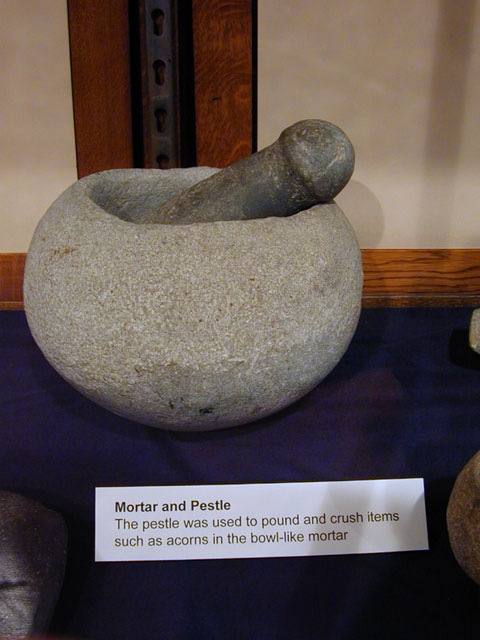
Steatite mortar and pestle
Steatite mortar and pestle [Courtesy of the Catalina Island Museum]
Unfinished steatite bowl
Unfinished steatite bowl [Courtesy of the Catalina Island Museum]
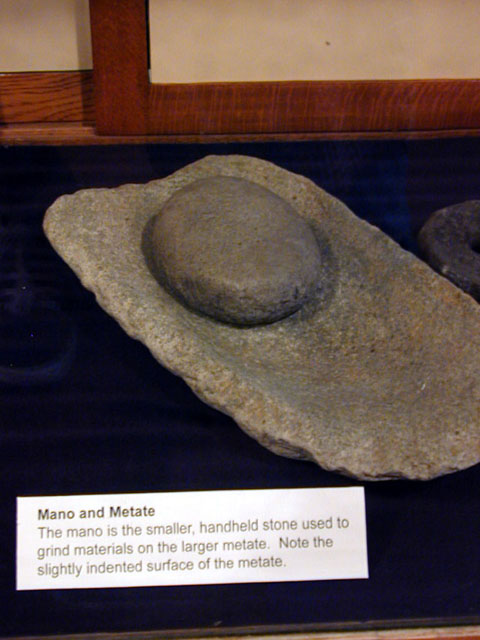
Steatite mano and metate
Steatite mano and metate [Courtesy of the Catalina Island Museum]

Frequently Asked Questions

1. When was the Casino building built?

The building was completed in May, 1929. It took fourteen months to build, at a cost of $2 million.

2. Who designed the Casino building?

The building was designed by Architects Walter Webber and Sumner A. Spaulding.

3. What was on the site prior to the present Casino building?

From 1920-1928, the octagonal Sugarloaf Casino was on the same site. It was a dance pavilion. It was also used as a roller skating rink, school, and restaurant. When it was torn down to make room for the current Casino Building, the steel framework was moved to the Bird Park where it became the main aviary. Sugarloaf Rock at the end of the point was blasted away in March, 1929, to enhance the view of the new Casino building.

4. How is the Casino building used?

Casino is an Italian word meaning “place of entertainment” or “social gathering place.” The Casino was built to house a state-of-the-art (for that time) theater and ballroom.

5. Where can I look for additional information about the Casino building?

The best and only book is The Casino by Patricia Anne Moore (1979, revised 1999). This book can be viewed at the Avalon Library and purchased at the Santa Catalina Island Museum

Catalina Island Casino

Learn more about the history of Catalina Island Casino

6. What is the name of the Indians who lived on the Island and what happened to them?

Native Americans who lived in the Los Angeles area and the Southern Channel Islands (including Santa Catalina Island) spoke a language distinct from their neighbors to the North and South of them. They have come to be known as the Gabrielino, because many of those who survived European diseases and the disruption on their normal trade patterns and culture went to the Mission San Gabriel in Los Angeles, some forcibly and some willingly. The most recent radiocarbon dating indicates human habitation of the Island for approximately 7,000 years before present. Other Channel Islands have found even earlier dates.

The Native Americans who lived here at the time the Spanish found them called Catalina Island “Pemú’nga” (most current spelling based on linguistic research of scholars; there are no fluent speakers of the Gabrielino language). We’re not sure when the last native Gabrielino went to the missions, but the missions’ baptismal records show Islander baptisms until the 1820s. Today one mainland group of Gabrielino ancestry, located in the San Gabriel area, calls themselves “Gabrielino/Tongva.” The United States government has not yet formally recognized any of the Gabrielino groups.

Learn more about the Gabrielino/Tongva Indian Tribe.

7. What are some statistics for Catalina Island?

Catalina Island is 21 miles long and 8 miles wide at the widest point, and about _ mile wide at the Isthmus. Its perimeter of 54 miles encompasses approximately 47,884 acres or about 76 square miles. The highest point on the Island is Mt. Orizaba at 2,097 feet. It is 26 miles from Avalon to San Pedro and 21 miles from Arrow Point on Catalina to Point Vicente on the mainland. The Catalina Channel is about 3 miles deep.

8. Is Avalon the only town on Catalina Island?

Catalina Island has a few small communities, such as Two Harbors on the Isthmus, but 2.6 square mile Avalon is the only incorporated city. Prior to the annexation of Pebbly Beach and Avalon Canyon in late 1997, Avalon was one square mile in size.

9. What are the Island's main industries?

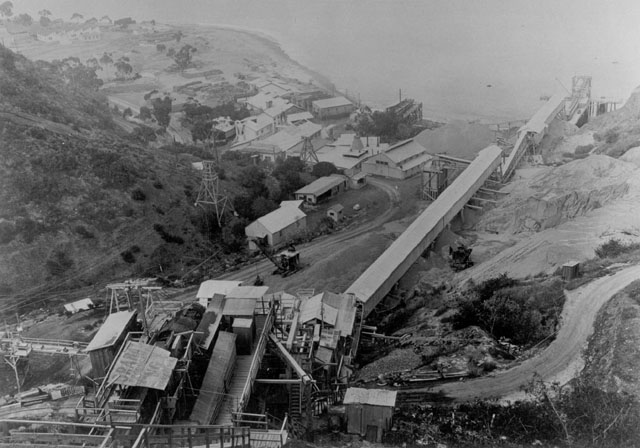
Tourism and quarrying are the Island’s main industries. In the 1930s, Catalina Island also had a pottery factory and a furniture factory. In the 1860s and the 1920s, a small mining industry briefly existed on the island. Miners discovered silver in 1864, but when the Army occupied the island that same year, all but a few miners with substantial claims were forced to leave. In the 1920s, William Wrigley, Jr., by then owner of the island, opened several mines which produced lead, zinc, and silver. The mines were closed when the price of silver dropped. In the late 1800s and early 1900s, ranchers raised sheep and cattle on the Island. The first ranch was established in 1846, but ranching died out in the 1950s when it was no longer profitable.

10. What is the history of the Catalina pottery factory?

The Catalina Island Tile and Pottery factory operated from 1927 to 1937. It was established by the Santa Catalina Island Company to take advantage of the clay deposits discovered by William Wrigley, Jr. and David M. Renton and, more importantly, to use these to help reduce construction costs on the Island by producing building materials locally. Pottery and tiles produced in the factory during its ten years of operation are incised with “Catalina Island” or “Catalina” on the bottom and have distinctive colors such as Toyon red, Descanso green, Mandarin yellow, and others. After the factory closed, the molds were sold to Gladding McBean on the mainland. They used the Catalina name for a while and marked it with blue or black ink.

Catalina Island Pottery

11. What is the Wrigley Institute for Environmental Studies?

In October 1995, the University of Southern California received a grant from the Wrigley family to expand the scope of their USC Marine Science Center at Fisherman’s Cove to include environmental sciences, hence the name change. The lab was renovated in 1996 and the dorms in 1997. The hyperbaric and decompression chamber is operational for emergencies (divers with the bends). Expanded educational programming includes classes for USC and California State University students, the USC Sea Grant Program/Island Explorers which includes curriculum and an overnight visit for K-12 students, and Elderhostel. Postdoctoral fellows and other scientists are conducting ambitious new environmental research projects.

Learn more about Wrigley Institute

12. Who named the Island?

In 1542, Catalina Island was discovered by Juan Rodriguez Cabrillo, who named it San Salvador and claimed the island in the name of the king of Spain. In 1602, the island was rediscovered by Spanish explorer, Viscaino, who landed here on Saint Catherine’s Feast Day (St. Catherine of Alexandria). He named it Santa Catalina Island in her honor.

13. Who has owned Catalina Island over the years?

The Gabrielino Indians lived on Catalina Island for over 7,000 years. When Cabrillo discovered the island in 1542, it was claimed by the king of Spain. Mexican ownership dates from 1821, when Mexico achieved its independence from Spain. In 1846, Governor Pio Pico of Mexican California granted Catalina Island to a private citizen, Tomas Robbins, who owned it until 1850. In that year, he sold Catalina to Jose Maria Covarrubias for $10,000.

Covarrubias sold the island to Albert Packard of San Francisco in 1853. The Island then went through a complex phase of ownership changes and divisions until it was acquired by James Lick in 1864. By 1867, Lick had entire ownership of the Island. In 1887, George Shatto bought the entire Island for $200,000 from the Lick Estate (Lick died in 1876), but lost the island due to debt and foreclosure.

The Lick Estate then sold the island to William Banning in 1892 for $128,740. The Bannings established the Santa Catalina Island Company in 1896 and transferred ownership of the Island to the Company that year. After a devastating fire that burned a quarter of Avalon in 1915, the Bannings faced financial difficulties and sold the Island Company to William Wrigley, Jr. of Chicago Cubs and chewing gum fame.

This now-historic event cast the die for permanently preserving substantially all of Santa Catalina Island in its natural state. During the next 56 years, various conservation practices were initiated by the Wrigley-led Santa Catalina Island Company, including much-needed animal controls, protection of watersheds and reseeding of overgrazed areas.

Throughout the term of the Wrigley family stewardship, the interest in conservation increased. In 1972, members of the Wrigley family established the Santa Catalina Island Conservancy as a nonprofit organization dedicated to the conservation and preservation of Santa Catalina Island. On February 15, 1975, the final step was taken to ensure the protection of the majority of Santa Catalina Island when Mr. and Mrs. Philip K. Wrigley and Mrs. Dorothy Wrigley Offield, through the Santa Catalina Island Company, deeded 42,135 acres of the Island to the Conservancy. With this gift, the conservation and preservation of most of Catalina’s interior and 48 miles of its coastline were given permanent status in perpetuity. Prior to this, in 1974, the Santa Catalina Island Company entered into a 50-year open space agreement with Los Angeles County, guaranteeing public recreational and educational use of 41,000 acres of Santa Catalina Island, consistent with good land conservation practices. When the Conservancy received land title to most of the Island a year later, it took over the responsibility for the County easement of 41,000 acres of the Conservancy’s 42,135 acres.

Catalina Island Museum

Catalina Island Conservancy

14. How did Catalina Island form?

The island was formed by subduction in which the Pacific tectonic plate goes under the continental (mainland) plate.

15. Which branches of the military trained on the island during World War II and where were they stationed?

The U.S. Maritime Services (Merchant Marines) were in Avalon, the Army Signal Corps were at Camp Cactus, the Coast Guard was at the Isthmus, and the Office of Strategic Services was at Toyon.

16. What are the eight Channel Islands off California's coast and which of them are part of Channel Islands National Park?

The four Northern Islands are San Miguel, Santa Rosa, Santa Cruz, and Anacapa. The four Southern Channel Islands are San Nicolas, Santa Barbara, Santa Catalina, and San Clemente. Channel Islands National Park includes the islands of Santa Rosa, Santa Cruz, Anacapa, Santa Barbara, and San Miguel.

17. Do communities exist on any of the other Channel Islands?

Avalon is the only incorporated city on any of the Channel Islands. The Navy has small installations on San Clemente and San Nicolas Islands. There were small ranching operations on several of the Northern islands in the past (Santa Rosa still operates as a cattle ranch).

18. Which island was the real ``Island of the Blue Dolphins?``

The island where the Native American woman lived alone for 18 years (after the rest of her people were taken by boat to the mainland) was San Nicolas Island. The book Island of the Blue Dolphins was written by Scott O’Dell. The true story on which he based his book tells of the “Lone Woman of San Nicolas.” Because of the island Indians’ repeated confrontations with sea otter hunters, mission padres on the mainland feared for the Indians’ safety and in 1835 sent a schooner to evacuate the island. As they were loading the ship, one woman realized her child had been left behind in the village and hurried off to find it. With strong winds rising, the ship had to sail away, leaving the woman behind. Wild dogs apparently had killed her child and the ship could not go back for her. She stayed alone on the island until a hunter, George Nidever, discovered her. He brought her home to live with him and his wife in Santa Barbara, but she died less than two months later of dysentery. (Information from Jan Timbrook, “The Lone Woman of San Nicolas Island,” Bulletin of the Santa Barbara Museum of Natural History, no. 155 (November 1991.)

Learn about Channel Islands

19. Are there animals who are native to Catalina Island?

Animals which are considered “native” to the Island include Catalina Island gray fox (probably brought to the Island from other Channel Islands by Native Americans), small rodents such as mice, squirrels and the ornate shrew, bats, 6 kinds of snakes including Pacific rattlesnake, lizards, and tree frogs. Animals which are considered “introduced” (newcomers) include goats (most likely introduced in the early 1800s, rather than by the Spanish explorers who came much earlier, as is commonly thought), bison (1924), mule deer and wild boar (introduced to the Island in the 1930s), black buck antelope (1972), and bull frogs. Catalina also has many species of birds including the bald eagle which has been reintroduced to the Island through the Institute for Wildlife Studies Bald Eagle Project.

Learn more about the Bald Eagle Project (link opens in new window)">Learn more about the Bald Eagle Project

20. Why are there bison on Catalina Island?

Fourteen were brought to Catalina in 1924 to make a film, though presently the name of that film is unknown. Today the population is maintained at about 200. Periodically the herds are thinned out by the Santa Catalina Island Conservancy and the surplus bison are sold and shipped to the mainland.

21. What can you tell me about the history of ranching on the Island?

Fenced in by ocean and free of large predators, Santa Catalina Island attracted enterprising ranchers who hoped to make money raising sheep and cattle for wool, mutton, hides, and beef. Tomas Robbins, an American who became a naturalized Mexican citizen, established the first ranch on Santa Catalina island in 1846 when he received the Island as a land grant from Mexican governor Pio Pico. Four years later, he sold the Island to Jose Maria Covarrubius, first in a series of absentee owners. Squatters soon settled in various coves that still bear their names. Most of them raised sheep, which reportedly numbered more than 20,000 by 1864. When James Lick acquired the Island in 1867, he evicted all but three of the squatters, who were granted leases to run sheep and cattle. From 1915-1923 the Mauer Cattle Company leased grazing rights from the Santa Catalina Island Company (formed in 1894). When its lease expired, the Santa Catalina Island Company took over ranching operations, maintaining several thousand head of cattle until the 1950s. Today, no sheep or cattle remain on the Island.

22. When was the island first developed for tourists?

In 1887, George Shatto, a 37-year-old Michigan businessman, bought Catalina Island with the intent to create a winter resort. He immediately began making plans to build a town (which became Avalon), initiated the construction of the Hotel Metropole and a wharf, and placed into service his steamer, the Ferndale

23. Who were the Bannings and what changes did they make on the Island?

Phineas Banning, a prominent stage coach line operator based in the Los Angeles area, began operating a regular steamship between the Island and the mainland in the mid 1800s. By the early 1880s, the Banning family saw another opportunity as the Island started to attract visitors and residents. In 1884, they established the Wilmington Transportation Company, which oversaw a series of ships making the run to the Island. When George Shatto ran into financial troubles, the Bannings purchased the Island from him in 1892, increased their fleet of ships, and spurred on the Island’s fledgling tourist industry.

The Bannings built the island’s first substantial infrastructure, providing water, electricity, waste disposal, and communications services, building good roads, and installing law enforcement and fire protection services. During the period they owned the island, from 1892 to 1919, visitor attractions on the Island also expanded exponentially to include a dance pavilion, golf course, tennis courts, an incline railway, Greek amphitheater, and aquarium. Tourists could enjoy the music of the Porters Catalina Island Marine Band, hunt and fish, watch fireworks, take stagecoach rides, and view the wonders of the sea through the floors of glass-bottomed boats. George S. Patton, Jr., destined to become famous as a general during World War II, spent his summers at a family home on the Island during this time.

24. What changes did the Wrigleys make on the island?

The Wrigleys of Chicago purchased Catalina Island in 1919 and quickly set about developing it further. With William Wrigley, Jr., guiding its evolution, the Island was soon home to the Sugar Loaf Casino, Atwater Hotel, Band Box Theater, Bird Park, and Catalina Clay Products plant. The Wrigleys imported deer and boar for hunters, brought in the Chicago Cubs for spring training, and began hosting the Bobby Jones Amateur Golf Tournament. To get to the tourist paradise, visitors could steam to the Island in the expensive and spacious SS Avalon and SS Catalina or take advantage of the new cross-channel air service.

25. How did Avalon get its name and what does it mean?

After Catalina Island was sold to George Shatto in 1887, he had the town surveyed and streets laid out. He then sold the first lots. He didn’t want the town named “Shattoville” and asked his sister-in-law, Etta Whitney, to name the town. She chose “Avalon,” a Celtic word meaning “island of apples.” It is also the name of the place in Tennyson’s poem, “Idylls of a King,” where King Arthur went to heal himself.

26. Is the story true that the builder/owner of the Holly Hill House refused to let women on the property after his bride-to-be jilted him, because she didn't want to live in such an isolated place?

Lookout Cot (later Holly Hill House) was built in 1890 as a private residence by Peter Gano, a retired engineer from Pasadena. His sister was to come live with him, but she never did. He did allow women on the property.

27. Where and when did the Chicago Cubs train?

The Chicago Cubs had spring training nearly every year from 1921 to 1951 at the Las Casitas ball field on Avalon Canyon Road. There is a memorial plaque on the site.

Learn more on Chicago Cubs history

28. What is the Tuna Club?

The Tuna Club was founded in 1898, by Charles Frederick Holder. Holder and the Tuna Club pioneered and popularized sportfishing as a conservation measure to slow down the declining numbers of fish. The goal was to give the fish a fighting chance by using the lightest weight fishing line possible. It is an exclusive club and membership is partially based on the ability to capture certain species of fish using specified weights of fishing line.

29. Where can I find old photographs of Catalina Island and Avalon?

The Catalina Island Museum at 1 Casino Way in Avalon (310/510-2414) has original photographs.

LA County seal

County of Los Angeles

Do You Need Help?
211 LA County
Public Alerts
Cooling Centers

SITE INFO

Accessibility
Language Access Support
Disclaimer
Privacy Policy
All Library Policies

ABOUT US

About the Library
Library Holidays
Strategic Plan
Career Opportunities
Public Records
Library Commission
Solicitations
Statistics
Land Acknowledgment
Civic Resources

CONTACT US

Email - Ask a Librarian
Text/Chat (M-F 12 pm - 6 pm)
Recommend a Title for Our Collection
Film at a Library
Performer and Presenter Application
Press Room
Support Us
Volunteer
Join a Friends Group
Donate
CONTACT US
LACOUNTY.GOV
  • My Account
  • GET A LIBRARY CARD
    • GET A NEW CARD
      • Digital Library Card
      • Library Cards & Your Account
      • Library Card Application (English / Spanish)
      • Library Card Application (English / Chinese)
      • Get a PIN
      • Get notices by email
      • Frequently Asked Questions
    • Library Policies
      • Library Cards & Your Account
      • Borrowing Materials
      • Computer & Wi-Fi Access
      • Collection Policy
      • Customer Expectations
      • Guidelines for Use of Meeting Rooms
      • Guidelines for Use of Study Rooms
      • Social Software Policy
      • Language Access Support
      • Privacy Policy
  • Digital Library
    • Explore
      • eBooks & Audiobooks
      • Movies & TV
      • Music
      • Newspapers & Magazines
      • Freegalmusic
      • Hoopladigital media
      • Kanopydigital media
      • Libby, by OverDriveebooks and magazines
      • PressReaderdigital magazines
    • Learn
      • Online Learning
      • Brainfuselive tutors
      • Earn your High School Diploma
      • Gale Coursesinstructor-led
      • Learn Basic Tech
      • Learning Expresstest prep
      • LinkedIn Learning (formerly Lynda.com)video classes
      • Mangolanguages
      • Leamosliteracy
      • Universal Classinstructor-led
    • Research
      • BiblioBoard Community Collections
      • Databases
      • Digital Collections
      • Magazines
  • LOCATIONS
  • BOOKS & WRITING
    • SEARCH THE CATALOG
    • Getting Started
    • Booklists
    • Recommend a Title for our Collections
    • More Books to Explore: Suggestions Just for You
    • Books by Mail
    • NoveList Plus
    • Writers’ Corner
    • Tell Your True Tale
  • Teens & Kids
    • Teens
      • Teens
      • Virtual Programming
      • Activity Ideas for Teens
      • Book Reviews by Teens
      • Students
      • Volunteer
    • Kids
      • Kids
      • Virtual Programming
      • Activity Ideas for Kids
      • Students
      • Online Resources
    • Parents & Families
      • Students
      • Early Learners
      • Healing Library Kits
      • Parent Support & Resources
      • Activity Ideas for Early Learners
      • Kids’ Fine Reduction: Great Read Away
      • Virtual Programming
  • Resources
    • Programs
      • Books for Jails
      • Business Resources
      • Citizenship
      • Earn Your High School Diploma
      • LGBTQ+ Pride
      • My Brother’s Keeper Peer Advocates
      • Tools for Job Seekers
      • Work Ready: Borrow a Laptop & Learn Job Skills
      • Older Adults
    • Services
      • Connect to Tech
      • COVID-19 Antigen Tests
      • Discover & Go
      • Federal Government Documents
      • Hotspot Loans
      • MākMō
      • Metro TAP Cards
      • Park & Connect
      • Printing
      • Request a Room
      • Special Collections
      • State Parks Passes
      • Tax Info
      • Tool Lending Library
      • Vaccine Clinics
      • Veterans Connect
      • Wi-Fi
    • Cultural
      • American Indian Resource Center
      • Asian Pacific Resource Center
      • Black Resource Center
      • Chicano Resource Center
      • Faith, Culture, & Community
    • Local History
      • Agoura Hills
      • Antelope Valley
      • Carson
      • Catalina Island
      • Claremont
      • East Los Angeles
      • Gardena
      • Lakewood
      • La Puente Valley
      • Malibu
      • Pico Rivera
      • San Dimas
      • San Fernando
      • San Gabriel
      • South Gate
      • Willowbrook
  • EVENTS
    • Virtual Programming
  • Donate
×
  • Search the Catalog
  • Search the Website
Advanced
Search
Search

Downloads and Streaming

Digital Media

With your LA County Library card, you can download or stream eBooks, eAudiobooks, magazines, music, and movies on your computer, tablet, or phone. It's free and you'll never have to worry about overdue fines!

You'll need a library card in good standing and a PIN to access most downloadable & streaming content.

  • ebooks
  • audiobook icon
  • music icon
  • magazine icon
  • movie icon

Kindle Paperwhite eReader

eReaderBanner

Welcome to a New Way to Read...

Have you walked into a library and wished you could check out more books than you could possibly carry? Check out a Kindle Paperwhite at participating libraries with a collection of titles that you are sure to enjoy. Each Kindle has been loaded with expert-selected books.

You don’t need internet access - all the books are pre-loaded onto the Kindle so you are ready to read.

  • Three week checkout
  • Renew up to 3 times, as long as no one else is waiting
  • Must be 18 or older (or under 18 with parent permission)
  • eBooks cannot be added to this device by user

How do I get one?

  • Visit a participating library to check out or place a hold on a Kindle Paperwhite. Kindles are not sent to other libraries for pick up.
  • Note: Selection of genres varies per library. Click on a library below to see the list of genres.

Library Locations with eReaders

Click on the library to view list of genres available.

Many of our libraries offer enhanced resources, computers, and online services to support your homework needs. Check with your local library!

Family Place

What is Family Place?

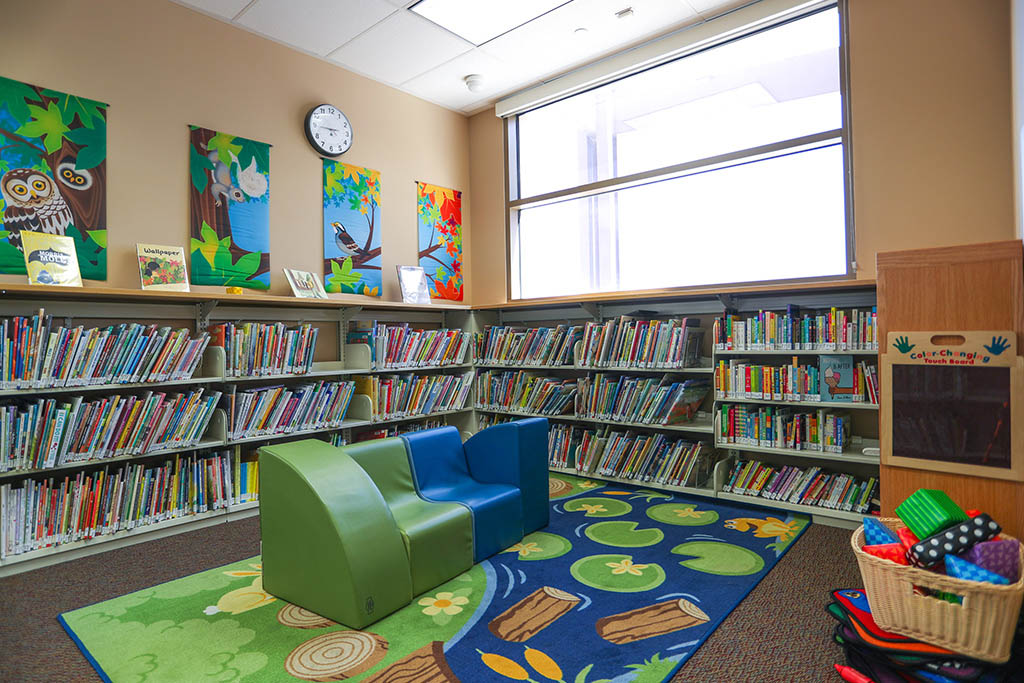
A Family Place Library is a center for early childhood information, parent education, emergent literacy, socialization, and family support. Family Place builds on the knowledge that good health, early learning, parent involvement, and supportive communities play a critical role in young children's growth and development. Each Family Place Library features the following core elements:

  • A bright, colorful, and welcoming space for young children and their parents.
  • A collection of books, toys, videos, music, and other materials for babies, toddlers, parents, and service providers
  • Access to resources that emphasize emergent literacy, reading readiness, and parent education.
  • Developmentally appropriate programming, such as baby and toddler storytimes for younger children and their parents.
  • Outreach to new and underserved populations.
  • The Parent-Child Workshop is a five-week workshop featuring local professionals, such as nutritionists, speech and language therapists, and child development experts, who serve as resources for parents.

The first three years of a child's life lay the foundation for learning. Get the tools and resources you need to give your child the best possible start.

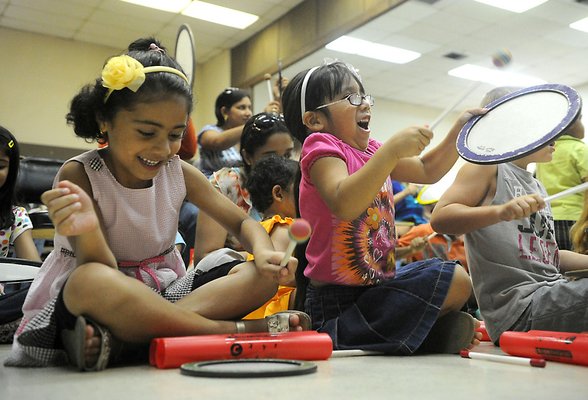
Family Place Library Children playing music in Family Place Library

citizenship in a bag

Citizenship-in-a-Bag contains:

  • Settlement information for new immigrants to the United States
  • Information on the U.S. naturalization process;
  • Study materials for the naturalization test
  • Reference materials on the rights and responsibilities of U.S. citizenship
  • Multimedia tools including DVDs and an audio CD
  • Teaching guides and planning resources
  • flash cards and books

Checkout or place a hold on a Citizenship-in-a-Bag toolkit.

Great! Thank you for sharing your photos with Catalina PhotoShare, a community history project of LA County Library.

Your photos will be reviewed and if they meet the criteria, they will be added to the Catalina PhotoShare online collection.

If you have any questions, please contact: digitalprojects@library.lacounty.gov

Terms of Service and Laptop Library Locations

Laptops in this kiosk can be checked out by customers with a LA County Library card in good standing.  The laptop is due back in the kiosk before the library closes on the same day it is checked out.

If you do not return the laptop to the kiosk on the same day you check it out, your library account will be charged the full replacement cost of the laptop.

When you check out a laptop from this kiosk, you agree to use it within the library only.  If you remove the laptop from the library, you may held criminally responsible for theft of the laptop and/or be charged the full replacement cost of the laptop.

You are responsible for the laptop and you agree that you will reimburse the LA County Library for any damages if the laptop is damaged, lost or stolen while checked out to you.

If you check out a laptop and it is damaged, you will give it to library staff immediately.

You must save to a removable storage device (such as a USB drive) since your work will not be saved to the laptop beyond your current checkout.

LA County Library will not be held responsible for any damage or loss of data or media due to any cause while you are using a laptop from this kiosk.

By using this laptop, you must adhere to the Library’s Acceptable Use Policy. Laptops are available at the following libraries:

A C Bilbrew Library

Artesia Library

Culver City Julian Dixon Library

Clifton M Brakensiek Library

East Los Angeles Library

El Camino Real Library

La Mirada Library

La Puente Library

Leland R Weaver Library

Manhattan Beach Library

Paramount Library

Quartz Hill Library

Sorensen Library

South El Monte Library

South Whittier Library

Temple City Library

View Park Bebe Moore Campbell Library

Walnut Library

West Hollywood Library

Willowbrook Library

Consumer Health Information Program

The Consumer Health Information Program assists the public with medical research by providing information from reliable sources. Customers are invited to use the Norwalk Library collection which consists of books, magazines, videos, and online databases related to health topics. We also provide individualized research services.

Please be aware, we do not provide medical advice, nor are the materials we provide a substitute for a professional medical opinion.

What Can We Do for You?

We can provide you with information on topics such as:

  • Medical conditions or diseases
  • Prescription medications
  • Surgical procedures
  • General physician and hospital information
  • Book and website recommendations for further reading

How to Contact Us

Location: Norwalk Library

Phone: (562) 868-4003

Fax: (562) 868-4065

Email: chips@library.lacounty.gov

Online Resources

Health Databases *

Health & Fitness eBooks and Audiobooks *

LA County Library Californiana Collection

Accessing the Collection

The Californiana Collection is in closed stacks at the Norwalk Library located at 12350 Imperial Hwy, Norwalk, CA 90650.

About the Collection

The Californiana Collection consists of over 24,000 books and over 200 magazine and newspaper titles in paper and on microfilm as well as a collection of state documents including state and county budgets. The goal of this collection is to present a complete picture of the history, culture, environment and artistic expression of the people of California and to some extent, the western United States.

Collection Highlights

  • California Census Schedules from 1850 to 1910
  • Copies of The Alta California newspaper 1849-1891, as well as dozens of other 19th century newspapers from Gold Rush boomtowns, the Owens Valley and San Francisco
  • The Los Angeles Star newspaper 1851-1879
  • City directories dating from the 19th century
  • Official city and county histories from the 19th and 20th centuries
  • Materials on the Donner Party, California water projects, famous California crimes, Hollywood culture, biographies of Californians, pioneer narratives of the early days of California, and histories of the state written over the course of 150 years